Overleaf Web MCP
MCP server for revision-checked Overleaf editing, compilation, and review threads
Documentation
Overleaf Web MCP
Let Claude, Cursor, or any MCP client read, edit, compile, and review your Overleaf projects, signed in as you.






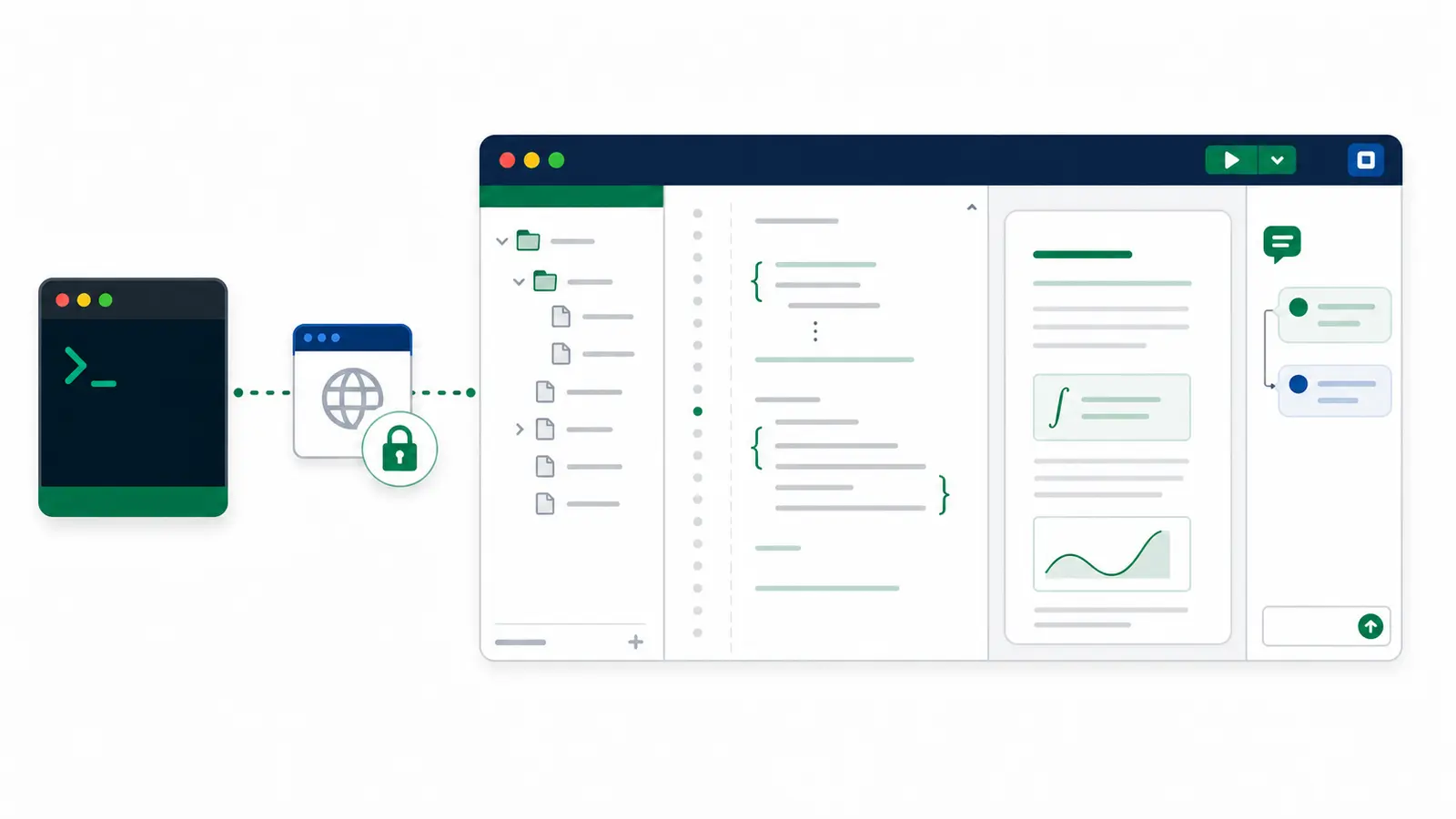
Overleaf Web MCP is an unofficial Model Context Protocol server. It signs in to Overleaf once through a browser window you control, then lets an AI assistant work on your projects the way you would in the web editor: browse files, make revision-checked edits, optionally as tracked changes, compile, and handle review comments. It uses the same browser-facing endpoints the Overleaf editor uses, so no Git integration or premium plan is needed for the core workflow.
What you can say
Once connected, talk to your assistant in plain language. It picks the tools.
- "Create a new project called Grant renewal from the folder I zipped, and make
proposal.texthe root." - "List my Overleaf projects and open the one called Thesis."
- "Rewrite the introduction of
main.texfor a general audience, as a tracked change." - "Compile the paper and tell me whether it built."
- "Which figures in
./figuresdiffer from what's in the project? Upload only those." - "Make the project match
~/papers/thesis, and show me what would be deleted first." - "Summarize the open review comments and reply to the one about Table 2."
[!CAUTION] This client uses Overleaf's private, browser-facing APIs, which Overleaf may change without notice. Automating
www.overleaf.commay carry Terms-of-Service and account risk. Start with a disposable project and keep request volume low.
Get started
You need Node.js 20 or newer, a Chrome-family browser (Chrome, Chromium, Brave, or Edge), and an Overleaf account.
1. Sign in once. A dedicated browser window opens. Complete the normal Overleaf login, including SSO or two-factor. Only cookies for the Overleaf origin are saved, to a file only your user can read. The session lasts five days from its last use, so sign in again after five idle days, or schedule npx overleaf-web-mcp keepalive daily to keep it alive (see configuration).
npx overleaf-web-mcp login
2. Connect your MCP client. For Claude Code:
claude mcp add overleaf --scope user -- npx -y overleaf-web-mcp serve
For Claude Desktop, Cursor, VS Code, and other clients, add this to their MCP configuration:
{
  "mcpServers": {
    "overleaf": {
      "command": "npx",
      "args": ["-y", "overleaf-web-mcp", "serve"]
    }
  }
}
3. Restart the client and ask it to check your Overleaf connection.
Client-by-client steps, self-hosted Overleaf, and troubleshooting, including the "failed to connect" you get when node is older than 20, are in the installation guide.
What it can do
- Start and manage projects. Create a blank or example project, clone one, or import a zip; rename, trash, restore, or archive projects with the name confirmed first; set the root document, TeX engine, and TeX Live image so the web editor's Recompile follows.
- Browse and organize. List and search projects, read the file tree with the configured root document and compiler, create folders and files, rename, move, upload one file or a list of them, download a file or the whole project as a zip, and delete with confirmation.
- Sync a folder. Compare a local folder with the project without changing anything, then upload only what changed, and optionally delete what you removed locally, in one confirmed call. Changed text files go through the same revision-checked edits as a single write, so a collaborator's concurrent edit is never overwritten.
- Write safely. Replace a whole document or a single section. Every edit is checked against the revision you read first, so a collaborator's concurrent change is reported instead of overwritten. Edits can be recorded as Overleaf tracked changes.
- Work by section. Parse
\sectionheadings in a file, read one section, replace one section. - Compile. Build the project's configured root document, or any document you name, and stop a running compile.
- Review. List comment threads with their locations, reply, add a comment anchored to exact text, and resolve or reopen threads.
- Follow history. Poll recent project history with a version cursor to see who changed what.
Tools
All 29 tools, grouped as in the tool reference, which has every parameter and result. Read-only tools change nothing on Overleaf and write nothing on your computer. Destructive tools can replace or remove existing content. All but stop_compile need a value repeated back first: the path, name, or count of what they delete, the revision of the document they replace, the planToken of a folder sync, or overwrite for a file that exists. Until 0.6.0, an upload that replaces a file and a folder sync without a planToken still run without one and report a deprecation; from 0.6.0 they are refused. The last column shows which tools read or write files on the computer the server runs on.
| Group | Tool | What it does | Annotation | Local effect |
|---|---|---|---|---|
| Account | auth_status | Verify the saved session and report when it expires | read-only | |
| Account | list_projects | List and search projects, newest first | read-only | |
| Project lifecycle | create_project | Create a blank or example project | ||
| Project lifecycle | clone_project | Copy a project, files and settings included | ||
| Project lifecycle | import_project_zip | Create a project from a local .zip archive | reads | |
| Project lifecycle | manage_project | Rename, trash, restore, archive, unarchive, or delete a project | destructive | |
| Project lifecycle | update_project_settings | Set the root document, TeX engine, TeX Live image, or spell-check language | ||
| Files | get_project_tree | Read the file tree with the project's compile settings | read-only | |
| Files | read_file | Read a text document and its revision | read-only | |
| Files | write_file | Replace a document with a revision-checked, minimal edit | destructive | reads |
| Files | create_file | Create a text document, optionally with content | ||
| Files | manage_entity | Create a folder, or rename, move, or delete an entity | destructive | |
| Files | upload_file | Upload a local file, replacing what is at that path when confirmed | destructive | reads |
| Files | batch_upload | Upload a list of local files to the paths given, creating missing folders | destructive | reads |
| Files | download_file | Save a document or binary file locally | destructive | writes |
| Files | download_project_zip | Save the whole project locally as one zip archive | destructive | writes |
| Folder sync | plan_sync | Compare a local folder with the project and show what a sync would do | read-only | reads |
| Folder sync | sync_directory | Upload what changed, and in mirror mode delete what is gone locally | destructive | reads |
| Folder sync | delete_entities | Delete several files or folders in one confirmed call | destructive | |
| Sections | get_sections | Parse the section headings of one file | read-only | |
| Sections | get_section_content | Read one section's body | read-only | |
| Sections | write_section | Replace one section's body, revision-checked | destructive | |
| Compilation | compile_project | Compile the project | ||
| Compilation | stop_compile | Stop the active compile | destructive | |
| Review | list_comments | List review threads with their locations | read-only | |
| Review | reply_to_comment | Reply in an existing thread | ||
| Review | add_comment | Add a comment anchored to exact text | ||
| Review | set_comment_status | Resolve or reopen a thread | destructive | |
| History | monitor_project_history | Poll recent project history with a cursor | read-only |
How it keeps your project safe
- Text edits require the revision from a prior read and fail with a conflict if the document changed underneath.
- Tracked changes are opt-in and never silently downgraded to plain edits.
- Deleting a file requires its path to be confirmed, deleting several requires their count, and trashing or deleting a project requires its name. Projects go to the trash first; permanent deletion only works from there. Downloads, including a whole-project zip, never overwrite a local file unless asked, and never write over the saved session.
- A write that times out is observed, never resubmitted, so nothing is applied twice. The same holds for each file in a batch upload.
- Given the
planTokenfromplan_sync, a folder sync stops before changing anything if the project or the folder changed since the plan. Without one there is nothing to compare against, which 0.6.0 will refuse. It deletes only in mirror mode, only with the delete count confirmed, and never after a failed upload. - Optionally, you can limit which projects, which folders on your computer, and which kinds of change the server may touch (access policy). It keeps an assistant inside what you gave it; it is not a sandbox.
- Your session cookie stays on your machine in a file only you can read, and is never returned by any tool.
- While a project is open, up to 90 seconds after the last call, you may appear online to collaborators.
How it compares
The three most-starred Overleaf MCP servers and the two closest in design to this one, each checked against its own source code on 2026-09-22. They change often, so follow the links for their current state. ✅ supported, 🟡 partly (see the numbered notes), ❌ not supported.
| This project | OverleafMCP | olcli | overleaf-mcp-server | overleaf-mcp-rt | netique/overleaf-mcp | |
|---|---|---|---|---|---|---|
| Connects through | Web session | Git bridge | Web session | Git bridge | Web session | Web session |
| Tools | 29 | 8 | 19 | 4 | 22 | 17 |
| Works without Overleaf's paid Git integration | ✅ | ❌ | ✅ | ❌ | ✅ | ✅ |
| Self-hosted Overleaf | ✅ | ❌ | ✅ | 🟡¹ | ✅ | 🟡² |
| List and search your projects | ✅ | 🟡³ | 🟡⁴ | ❌ | 🟡⁵ | ✅ |
| Returns a document's text to the assistant | ✅ | ✅ | 🟡⁶ | ✅ | ✅ | ✅ |
| Sends edits as collaborative OT operations, not whole files | ✅ | ❌ | ❌ | ❌ | ✅ | ✅ |
| Refuses an edit if the document changed since it was read | ✅ | 🟡⁷ | ❌ | ❌ | ✅ | 🟡⁸ |
| Writes as tracked changes when asked | ✅ | ❌ | ❌ | ❌ | ❌ | ✅ |
| Accepts or rejects tracked changes | ❌ | ❌ | ❌ | ❌ | ❌ | ✅ |
Reads and replaces one \section | ✅ | ✅ | ❌ | ❌ | ❌ | ❌ |
| Creates, renames, moves, and deletes files and folders | ✅ | 🟡⁹ | 🟡¹⁰ | 🟡⁹ | ✅ | ❌ |
| Uploads and downloads binary files | ✅ | ❌ | ✅ | ❌ | ✅ | 🟡¹¹ |
| Compares a local folder with the project | ✅ | ❌ | ✅ | ❌ | ❌ | ❌ |
| Compiles on Overleaf | ✅ | ❌ | ✅ | ❌ | ✅ | ✅ |
| Reads the compile log and errors | ❌ | ❌ | ❌ | ❌ | ✅ | ✅ |
| Review comments: list, reply, add, resolve | ✅ | ❌ | ✅ | ❌ | ✅ | 🟡¹² |
| Creates, clones, imports, archives, and deletes projects | ✅ | ❌ | 🟡¹³ | ❌ | ❌ | ❌ |
| Saves the root document, compiler, and TeX Live image | ✅ | ❌ | ❌ | ❌ | ❌ | ❌ |
| Reads project history | ✅ | ❌ | ❌ | ❌ | 🟡¹⁴ | ❌ |
| Installs from | npm | npm | npm, Homebrew | source | npm | npm |
| License | MIT | MIT | MIT | MIT | AGPL-3.0 | AGPL-3.0 |
- Only where Overleaf's Git bridge exists, which on a self-hosted instance means Server Pro.
- Documented, but sign-in appears to require overleaf.com's
overleaf_session2cookie, which Community Edition does not set by default. - Only the projects named in its own configuration.
- Lists projects without search, and leaves out archived and trashed ones.
- Lists projects, with no search or filter.
- Files are saved to the server's disk; no tool returns a document's text.
- Git rejects the push if Overleaf moved on after the tool's own pull, but an edit made between the assistant's read and that pull is overwritten.
- Only with
strict_version: true; by default a concurrent edit is reported after the write. - Creates files by writing them; no rename, move, or delete.
- Creates, renames, and deletes files and folders; no move.
- Downloads binary files; no upload.
- Lists, replies to, resolves, and reopens threads, but cannot add a comment.
- Creates and renames projects.
- Reports what collaborators changed during the session.
Documentation
| Page | What it covers |
|---|---|
| Install | Claude Code, Claude Desktop, Cursor, VS Code, self-hosted Overleaf, troubleshooting |
| Using it | Example prompts and what happens underneath |
| Tool reference | All 29 tools with parameters and results |
| Safety model | Revisions, tracked changes, confirmations, error codes |
| Configuration | Environment variables, the access policy, proxies, where the session is stored, and keeping it alive |
| Internals | Protocol notes, reliability guarantees, related projects |
| Roadmap and Changelog | Where this is going and what changed |
For AI agents
The server sends usage instructions to the MCP client when it connects, and every tool description is self-contained, so an assistant does not need this README to use it correctly. Coding agents contributing to the repository should read AGENTS.md.
License
MIT.