agentcairn
официальныйЛокально-ориентированная память агента: хранилище Obsidian в формате plain-Markdown является источником истины, с перестраиваемым индексом DuckDB для гибридного поиска BM25 + векторного + графового извлечения.
Что можно делать с Agentcairn MCP?
- Recall relevant memories — Ask your assistant to
recalldurable facts from your Markdown vault, with project-aware ranking and cited permalinks. - Store new knowledge — Use
rememberto atomically write a Markdown note and update the index, making it immediately recallable. - Import Claude Code memory — Run
cairn import claude-memoryto preview or migrate existingMEMORY.mdfiles into the shared vault with provenance. - Sweep transcripts for capture — Trigger
cairn sweepto read supported transcript stores out-of-band and distill durable context into the vault. - Manage vault health — Run
cairn doctororcairn index-statusto verify vault integrity and rebuild the disposable DuckDB cache withcairn reindex. - Link related notes — Execute
cairn linkto write deterministicrelated:neighbors based on[[wikilinks]]for an Obsidian-native graph.
Документация
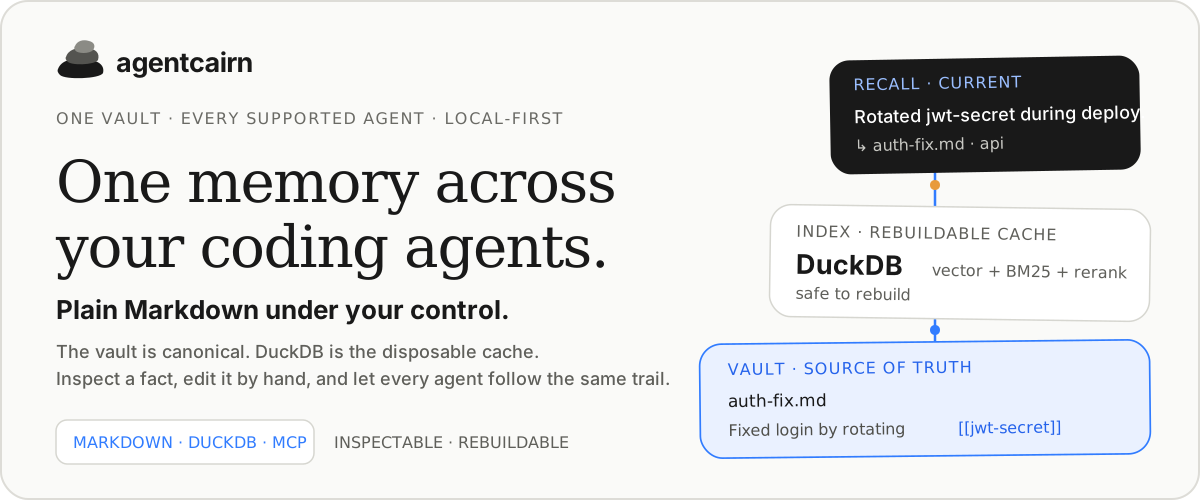




Одна долговечная память для поддерживаемых кодирующих агентов.
Ваше хранилище Markdown является каноническим. DuckDB — это заменяемый кэш для поиска.
Веб-сайт · PyPI · Компаньон для Obsidian · Бенчмарки
Камнем отмечают тропу для тех, кто идёт следом. agentcairn делает то же самое для кодирующих агентов: он захватывает долговечный контекст из используемых вами инструментов, сохраняет его в виде проверяемого Markdown с указанием происхождения и возвращает только наиболее релевантные фрагменты, когда другому агенту они нужны.
Доказательство, которое можно проверить
Память не скрыта за админ-консолью или облачной базой данных. Отдельный компаньон agentcairn-obsidian читает те же файлы Markdown, что и агенты, и показывает происхождение, актуальность, важность, замену и ссылки related:.
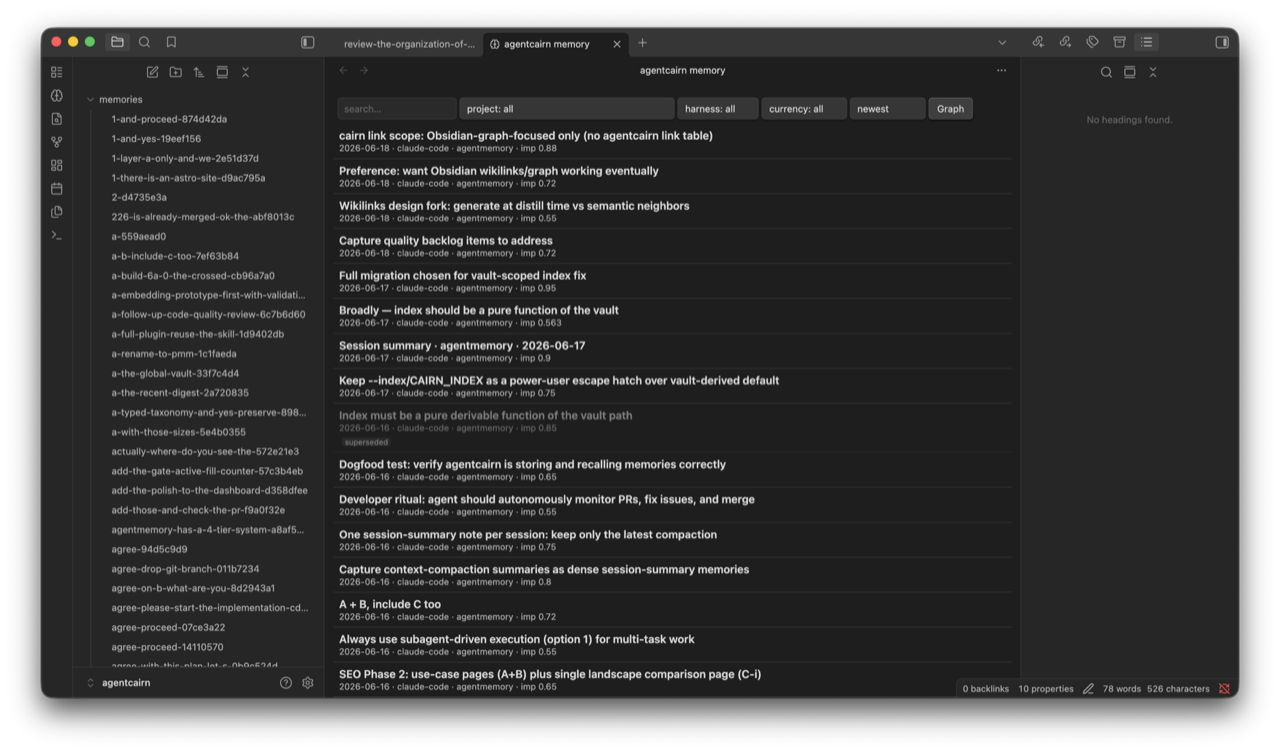
Реальное хранилище agentcairn в Obsidian. Список — это представление над файлами, а не второе хранилище памяти.
Снимок для самопроверки · 2026-07-15. При 417 локальных обращениях хранилище мейнтейнера возвращало контекст в
262× smallerраз меньше, чем полная загрузка хранилища каждый раз, — по оценкам,136.6M tokens of full-vault context avoidedв сумме. Подсчёт токенов использует примерно четыре символа на токен. Это не экономия на оплачиваемых токенах, и agentcairn не отправляет телеметрию.
Установка
Самый короткий путь — плагин первого класса. Он включает MCP-сервер, навык памяти и специфичные для хоста фоновые хуки — отдельная установка пакета agentcairn не нужна. Плагин запускается через uvx, поэтому сначала установите uv, если uvx --version ещё не доступен.
Claude Code
claude plugin marketplace add ccf/agentcairn
claude plugin install agentcairn@agentcairn
Claude Code получает пошаговое вспоминание в рамках проекта, захват сессии/компактации и команды /agentcairn:recall, /agentcairn:remember, /agentcairn:memory, /agentcairn:savings и /agentcairn:ingest.
Codex
codex plugin marketplace add ccf/agentcairn
codex plugin add agentcairn@agentcairn
Codex получает встроенные MCP-инструменты и навык памяти, вспоминание SessionStart с живой проверкой и захват SessionEnd с cairn sweep в качестве внешнего резерва.
Настройка с помощью агента
Уже используете skills.sh или рабочий процесс find-skills? Установите публичного помощника по настройке:
npx skills add ccf/agentcairn --skill agentcairn-setup -g
Затем спросите своего агента: Use $agentcairn-setup to preview, install, and verify AgentCairn for this coding agent.
Это устанавливает только руководство по настройке — не среду выполнения AgentCairn, MCP-сервер, плагин или хуки. Помощник делегирует эти изменения нативному установщику AgentCairn с предварительным просмотром и проверяет результат интеграции. Команды плагинов Claude Code и Codex выше остаются самым коротким путём.
Хранилище по умолчанию — ~/agentcairn и создаётся при первом использовании. В новом пустом хранилище пока нечего вспоминать, поэтому проверьте весь цикл явно:
You   → Remember this durable fact: staging deploys use blue-green.
Agent → written and indexed
You   → Recall the staging deploy strategy.
Agent → staging deploys use blue-green.  ↳ <memory permalink>
remember записывает заметку Markdown и запись индекса вместе, поэтому немедленное вспоминание — часть контракта. Первый локальный запуск может загрузить и прогреть настроенные модели эмбеддингов/реранкинга.
Контракт
| Обещание | Что это значит на практике |
|---|---|
| Markdown каноничен | Заметки, frontmatter и [[wikilinks]] — это долговечная память. Отредактируйте факт вручную; следующее согласованное чтение учтёт это. |
| Индекс одноразовый | DuckDB — производный кэш. Его удаление или пересборка не удаляет хранилище Markdown. |
| Одно хранилище для всех агентов | Поддерживаемые хосты используют одно настроенное хранилище, а не создают изолированную память для каждого инструмента. |
| История без потерь | Производные заметки не стирают молча сохранённые; заменённые и устаревшие факты остаются проверяемыми и понижаются, а не скрываются. |
| Каждый результат имеет контекст | Проект, статус актуальности и постоянные ссылки сопровождают вспоминание, чтобы агент мог отличить текущие локальные данные от межпроектной истории. |
Как это работает

- Захват: хуки хоста повышают оперативность;
cairn sweepчитает поддерживаемые хранилища транскриптов вне полосы как долговечный резерв. AgentCairn редактирует распознанные учётные данные, дедуплицирует, фильтрует по важности и дистиллирует перед автоматической записью в открытом виде. - Согласование: первое чтение транзакционно синхронизирует индекс хранилища с Markdown. Неудачная пересборка сохраняет последний хороший кэш, а долговечные файлы остаются нетронутыми.
- Вспоминание: BM25 и семантические векторы объединяются с помощью Reciprocal Rank Fusion, затем опционально реранкируются. Сбои модели/провайдера видимо откатываются к BM25 с диагностикой, а не возвращают несовместимые векторы.
- Запоминание: MCP-инструмент атомарно записывает заметку Markdown и обновляет индекс под одной блокировкой записи, делая успешное сохранение немедленно вспоминаемым.
Создано для доверия
- Локально по умолчанию. FastEmbed работает локально, MCP-сервер использует stdio, нет обязательного демона или внешней базы данных и нет телеметрии.
- Чёткие границы. Синхронизированное хранилище содержит Markdown; по умолчанию пересобираемый индекс
.duckdbнаходится вне его. Симлинки хранилища, выходящие за настроенный корень, отклоняются. - Коррекции с учётом времени.
valid_from,valid_untilиsuperseded_byсохраняют старые данные видимыми, но текущие факты ранжируются первыми. - Детерминированный граф.
[[wikilinks]]и опциональные соседиcairn linkсоздают нативный для Obsidian граф без просьбы к LLM выдумывать сущности. - Вспоминание с учётом проекта. Текущий проект усиливается по умолчанию; межпроектные результаты остаются доступными и помечаются. Автоматическое вспоминание ограничено проектом, если вы явно не выберете все проекты.
Поддерживаемые агенты
Каждый хост разрешает одно настроенное хранилище. cairn install предпросматривает обнаруженные хосты без записи. Записи конфигурации MCP делаются с резервным копированием и сохраняют несвязанные серверы; установки через плагины делегируются собственному CLI хоста.
| Хост | Интеграция | Настройка через | Фоновая память |
|---|---|---|---|
| Claude Code | Плагин + MCP + навык | cairn install claude-code | ✅ пошаговое вспоминание + SessionStart; захват SessionEnd/PreCompact |
| Codex | Плагин + MCP + навык | cairn install codex | ✅ вспоминание SessionStart; захват SessionEnd + очистка |
| Cursor | MCP + навык + импорт | cairn install cursor | ◐ внешняя очистка |
| OpenCode | Плагин + MCP + импорт | cairn install opencode | ✅ пошаговое вспоминание + захват при простое/компактации |
| Hermes Agent | Нативный MemoryProvider | integrations/hermes/ | ✅ авто-вспоминание + захват конца сессии |
| Antigravity | Плагин + импорт | cairn install antigravity --source <dir> | ◐ внешняя очистка |
| VS Code (Copilot) | MCP-сервер | cairn install vscode | — |
| Claude Desktop | MCP-сервер | cairn install claude-desktop | — |
| Любой другой MCP-хост | Портативный MCP-сервер | uvx agentcairn | зависит от хоста |
SessionStart в Codex был проверен вживую end-to-end с agentcairn 0.24.2 / плагином 0.1.2. Установленная диспетчеризация команд SessionEnd и отсоединённая очистка проходят точные проверки обработчиков; cairn sweep остаётся внешним резервом захвата. См. интеграцию OpenCode и интеграцию Hermes для деталей их нативных жизненных циклов.
Прямое использование
Плагин — самый простой путь, но agentcairn также является автономным CLI и MCP-сервером по запросу. Автономные установки требуют Python 3.11+.
uv tool install agentcairn

cairn init ~/agentcairn
cairn sweep --vault ~/agentcairn
cairn recall "how did we fix the auth bug?" --vault ~/agentcairn
cairn doctor --vault ~/agentcairn
Возьмите память Claude Code с собой
Автопамять Claude Code может заполнить общее хранилище без изменения исходных файлов. Команда по умолчанию предпросматривает только текущий репозиторий; добавьте --apply, чтобы записать отредактированные заметки и обновить индекс.
cairn import claude-memory                         # preview; writes nothing
cairn import claude-memory --apply                 # import this repository
cairn import claude-memory --project ../other --apply
Однонаправленный импорт читает MEMORY.md и его тематические файлы Markdown — никогда CLAUDE.md или .claude/rules/. Импортированные заметки сохраняют происхождение Claude Code, проекта и исходного файла. Когда источник меняется, предыдущая версия остаётся проверяемой, но помечается как заменённая; когда он исчезает, его импортированная версия истекает. Небольшой реестр .agentcairn/native-memory/ сохраняет этот жизненный цикл без двойного индексирования исходного контента. Используйте --source <dir> для пользовательского, управляемого или переопределённого сессией каталога памяти Claude, или --no-reindex при пакетном импорте.
Предпочитаете эфемерный процесс:
uvx agentcairn                             # MCP server
uvx --from agentcairn cairn recall "..."  # CLI; plain `uvx cairn` is a different package
Обслуживание и автоматизация CLI
cairn schedule install --vault ~/agentcairn  # launchd on macOS / user crontab on Linux
cairn schedule status
cairn link --vault ~/agentcairn              # write deterministic related: neighbors
cairn reindex ~/agentcairn                   # rebuild the disposable cache
cairn savings                                # local context-efficiency estimate
cairn index-status --vault ~/agentcairn
На других операционных системах запускайте cairn sweep из вашего планировщика.
Конфигурация и опциональные облачные уровни
Настройки находятся в ~/.agentcairn/config.toml; приоритет: флаг CLI → переменная окружения → файл конфигурации → значение по умолчанию.
cairn config --init
cairn config
auto_recall = true
auto_recall_k = 3
auto_recall_scope = "project"  # use "all" only as an explicit cross-project opt-in
Локальные эмбеддинги nomic-embed-text-v1.5 — по умолчанию. Voyage, эмбеддинги, совместимые с OpenAI, и судья долговечности Anthropic — опциональны. При включённом облачном провайдере оставшиеся фрагменты заметок с удалёнными секретами и запросы покидают машину; смена модели эмбеддингов пересобирает хранилище и может вызвать реальную задержку или затраты на API.
Измеренные бенчмарки
Репозиторий содержит воспроизводимый с фиксированными версиями харнесс LongMemEval-S + LoCoMo. По умолчанию — локальный nomic-embed-text-v1.5 плюс кросс-энкодерный реранкер.
| Набор данных / гранулярность | Метрика | Только BM25 | Гибрид RRF | Гибрид + реранкер |
|---|---|---|---|---|
| LoCoMo · ход | recall@5 | 0.527 | 0.562 | 0.662 |
| LongMemEval-S · сессия | recall@5 | 0.920 | 0.954 | 0.969 |
| LongMemEval-S · ход | recall@5 | 0.680 | 0.640 | 0.788 |
Контекст, возвращаемый при значении по умолчанию k=10, намного меньше полной индексированной истории:
| Набор данных | Средняя полная история | Среднее вспомненное | Сокращение |
|---|---|---|---|
| LoCoMo (3 разговора) | 25 646 токенов | 529 токенов | 51.1× |
| LongMemEval-S (полные 500) | 136 552 токена | 2 207 токенов | 64.7× |
Читайте цифры честно:
- Вспоминание при поиске — это не точность ответов на вопросы. Эти таблицы сравнивают контролируемые ветви поиска, а не качество ответов конечного пользователя или баллы лидерборда другого продукта.
- Подсчёт токенов использует эвристику примерно четырёх символов на токен. Сокращение сравнивает индексированный стог сена с возвращёнными фрагментами; это не экономия на оплачиваемых затратах.
- Усиление графа инертно на этих чат-корпусах, потому что в них нет нативного графа
[[wikilink]]. Он предназначен для реальных взаимосвязанных хранилищ. - Опциональный судья QA использует Anthropic, а не настройку GPT-4o из статей, поэтому результаты QA полезны для относительных абляций, а не для сравнения с опубликованными лидербордами.
Полные метрики, подборы эмбеддингов, измерения задержки, лицензии, команды и оговорки находятся в benchmarks/README.md.
Конфиденциальность и ограничения
- Хранилище — это открытый текст по замыслу, а не зашифрованное хранилище. AgentCairn редактирует распознанные шаблоны учетных данных перед автоматической записью body/title/tag; неизвестные шаблоны и ручные правки остаются вашей ответственностью.
- Файлы хранилища доступны только владельцу (
0600/0700). Поскольку хранилище — открытый текст, а редактирование — это best-effort, режим файла фактически является единственным контролем доступа. Настройки с общей группой (например, два Docker-контейнера в одной группе, но с разными UID) требуют группового доступа, поэтомуvault_group_writable = trueрасширяет новые заметки и каталоги хранилища до0660/0770. Это осознанный выбор: на macOS основная группа каждого локального пользователя —staff, поэтому групповое чтение по умолчанию открыло бы ваши воспоминания другим учетным записям на машине. Этот параметр никогда не расширяет доступ за пределы хранилища — индекс, реестры, файлы блокировок и~/.agentcairn/config.tomlостаются приватными. - Облачные функции — это явный исходящий трафик. По умолчанию все остается локальным. Включение облачного эмбеддера или LLM-судьи отправляет оставшийся отредактированный текст этому провайдеру.
- Проект находится в стадии бета. Для автономного использования требуется Python 3.11+, и первая загрузка локальной модели может занять время. Опубликованные доказательства поиска наиболее сильны для разговорной памяти, а не для универсального поиска по коду.
- Поведение в окружении зависит от хоста. Матрица выше намеренна: Cursor и Antigravity полагаются на захват sweep; универсальные MCP-хосты могут предоставлять инструменты без хуков жизненного цикла.
- Автоматизация зависит от платформы. Управляемое планирование нацелено на macOS launchd и пользовательский crontab Linux; в других средах используйте собственный планировщик.
Разработка
agentcairn использует uv исключительно для управления зависимостями и инструментами.
uv sync
uv run pre-commit install

uv run pytest
uv run ruff format .
uv run ruff check --fix .
uv run pre-commit run --all-files
Запустите офлайн-регрессию бенчмарка без ключей API:
uv run pytest benchmarks/tests/
Лицензия
Apache License 2.0 — разрешительная, с явным патентным грантом. Copyright © 2026 Charles C. Figueiredo.