TradeMemory Protocol
ทางการชั้นหน่วยความจำการซื้อขายด้วย AI สำหรับ MT5/ฟอเร็กซ์ พร้อมเครื่องมือ MCP 15 รายการ — จัดเก็บ/เรียกคืนการซื้อขาย ค้นพบรูปแบบ วิวัฒนาการกลยุทธ์ และหน่วยความจำถ่วงน้ำหนักผลลัพธ์
คุณทำอะไรได้บ้างด้วย TradeMemory Protocol MCP?
-
Recall past trades by context — ให้ผู้ช่วยของคุณดึงข้อมูลการเทรดก่อนหน้าโดยอิงจากคุณภาพของผลลัพธ์ ความคล้ายคลึงของตลาด ความเร็วของเวลา ระดับความมั่นใจ และสภาวะอารมณ์ ก่อนเข้าสู่ตำแหน่งใหม่
-
Record trades with full context — ให้ผู้ช่วยของคุณบันทึกการเทรดที่เสร็จสมบูรณ์พร้อมกับเหตุผล สภาวะตลาด และระดับความมั่นใจ โดยอัปเดตชั้นความจำทั้งห้าชั้นโดยอัตโนมัติ
-
Run pre-trade safety checks — ให้ผู้ช่วยของคุณประเมินการเทรดที่คาดว่าจะทำกับเกณฑ์ความเสี่ยงห้าปัจจัยที่ให้คำแนะนำแบบเต็ม ลดลง หรือข้าม
-
Detect behavioral drift and losing streaks — ขอการวิเคราะห์รูปแบบการเทรดของคุณเพื่อเปิดเผยแนวโน้มความมั่นใจ การแจ้งเตือนการขาดทุน และข้อผิดพลาดซ้ำๆ จากความจำของคุณ
-
Verify audit trail integrity — ให้ผู้ช่วยของคุณยืนยันว่าบันทึกการเทรดเฉพาะหรือห่วงโซ่ของทั้งวันไม่ถูกแก้ไข โดยใช้การตรวจสอบแฮช SHA-256
-
Export compliance-ready records — ให้ผู้ช่วยของคุณสร้างการส่งออกจำนวนมากของบันทึกการตัดสินใจเทรดสำหรับการตรวจสอบตามข้อกำหนดหรือการส่งเพื่อการตรวจสอบภายใน
เอกสาร





สถานะโครงการ (สิงหาคม 2026): ฟีเจอร์ครบถ้วน อยู่ใน โหมดบำรุงรักษา — ยังคงตรวจสอบรายงานบั๊กและช่องโหว่ด้านความปลอดภัย แต่ไม่มีแผนพัฒนาฟีเจอร์ใหม่หรือบริการโฮสต์เพิ่มเติม สำหรับงานที่ได้รับค่าตอบแทน ดู Trading Record Analysis
AI เทรดดิ้งของคุณเป็นโรคความจำเสื่อม และหน่วยงานกำกับดูแลเริ่มสังเกตเห็นแล้ว
มันทำผิดพลาดซ้ำเดิมทุกเซสชัน มันอธิบายไม่ได้ว่าทำไมถึงเทรด มันลืมทุกอย่างเมื่อ context window สิ้นสุดลง ในขณะเดียวกัน MiFID II กำลังยกระดับมาตรฐานการบันทึกการตัดสินใจของอัลกอริทึม (Article 17) EU AI Act กำหนดให้มีการบันทึกการกระทำของ AI อย่างเป็นระบบ (Article 14) เอเจนต์ของคู่แข่งของคุณเรียนรู้จากทุกการเทรด
สแตกของ AI เทรดดิ้งขาดเลเยอร์หนึ่งไป ทุก MCP server จัดการเรื่องการสั่งซื้อขาย — การวางออเดอร์ การดึงราคา การอ่านกราฟ ไม่มีตัวไหนจัดการเรื่องความจำ
เอเจนต์ของคุณซื้อ AAPL ได้ 100 หุ้น แต่ตอบไม่ได้ว่า: "ครั้งที่แล้วที่ฉันซื้อ AAPL ในสภาวะแบบนี้เกิดอะไรขึ้น?"
TradeMemory คือเลเยอร์ความจำ แค่ pip install เดียว เอเจนต์ AI ของคุณจะจำทุกการเทรด ทุกผลลัพธ์ ทุกความผิดพลาด — พร้อมร่องรอยการตรวจสอบ SHA-256 ที่ตรวจจับการแก้ไขได้
ใช้งานโดยเทรดเดอร์อิสระที่รันเช็กลิสต์ก่อนเทรดทุกครั้ง และใช้งานแบบ first-party กับบัญชี MT5 ที่บันทึกสัญญาณที่ถูกบล็อกพร้อมกับสัญญาณที่ถูกดำเนินการ ดู USE_CASES.md สำหรับรายละเอียดว่าแบบไหนใช้กับใคร
มันทำอะไรได้บ้าง
- ก่อนเทรด: ถามความจำของคุณ — ครั้งที่แล้วในสภาวะตลาดแบบนี้เกิดอะไรขึ้น? จบลงอย่างไร?
- หลังเทรด: แค่เรียกครั้งเดียวก็บันทึกทุกอย่าง — ความจำห้าเลเยอร์อัปเดตอัตโนมัติ
- ราวกันตกด้านความปลอดภัย: การติดตามความมั่นใจ การแจ้งเตือน drawdown การตรวจจับการแพ้ติดต่อกัน — ระบบจะบอกคุณเมื่อควรหยุด
ใช้งานได้กับทุกตลาด (หุ้น ฟอเร็กซ์ คริปโต ฟิวเจอร์ส) ทุกโบรกเกอร์ ทุกแพลตฟอร์ม AI TradeMemory ไม่ได้ดำเนินการเทรดหรือแตะต้องเงินของคุณ — มันแค่บันทึกและเรียกคืนเท่านั้น
ดูอินเทอร์เฟซ
tradememory-dashboard.onrender.com — แดชบอร์ดที่รันบนชุดข้อมูลตัวอย่างเพื่อการสาธิต ไม่ต้องติดตั้งอะไร
มันคือตัวอย่างอินเทอร์เฟซ ไม่ใช่ประวัติผลงานจริง: การเทรดเป็นข้อมูลสังเคราะห์และทุกตัวเลขบนหน้านั้นถูกติดป้ายกำกับไว้ชัดเจน สำหรับสิ่งที่เลเยอร์ความจำทำจริงในเทอร์มินัล pip install tradememory-protocol && tradememory demo --fast จะเล่นซ้ำการเทรด 30 รายการและแสดงการเรียกคืนและการปรับพารามิเตอร์ที่ได้จากข้อมูลเหล่านั้น
เริ่มต้นใช้งานอย่างรวดเร็ว
pip install tradememory-protocol
เพิ่มไปยัง Claude Desktop (claude_desktop_config.json):
{
  "mcpServers": {
    "tradememory": {
      "command": "uvx",
      "args": ["tradememory-protocol"]
    }
  }
}
จากนั้นบอก Claude: "บันทึกการเทรด AAPL ของฉันแบบ long ที่ $195 — ผลประกอบการดีเกินคาด มีการซื้อจากสถาบัน ความมั่นใจสูง"
Claude Code / Cursor / Docker
# Claude Code
claude mcp add tradememory -- uvx tradememory-protocol

# From source
git clone https://github.com/mnemox-ai/tradememory-protocol.git
cd tradememory-protocol && pip install -e . && python -m tradememory

# Docker
docker compose up -d
คำแนะนำแบบเต็ม: Getting Started (เส้นทางเทรดเดอร์ + เส้นทางนักพัฒนา)
ใครใช้ TradeMemory
| เทรดเดอร์หุ้นสหรัฐฯ | ระบบ Forex EA | ทีมปฏิบัติตามข้อกำหนด | |
|---|---|---|---|
| ตลาด | หุ้น (AAPL, TSLA, ...) | XAUUSD (ทองคำ) | หลายสินทรัพย์ |
| วิธีใช้ | เช็กลิสต์ก่อนเทรดทุกครั้ง | ซิงก์อัตโนมัติจาก MT5 | ร่องรอยการตรวจสอบการตัดสินใจครบถ้วน |
| คุณค่าหลัก | ระบบวินัย — ความจำก่อนทุกการตัดสินใจ | บันทึกว่าทำไมสัญญาณถึงถูกบล็อก ไม่ใช่แค่สัญญาณที่ถูกดำเนินการ | บันทึก SHA-256 ที่ตรวจจับการแก้ไขได้สำหรับหน่วยงานกำกับดูแล |
| รายละเอียด | อ่านเพิ่มเติม → | อ่านเพิ่มเติม → | อ่านเพิ่มเติม → |
วิธีการทำงาน
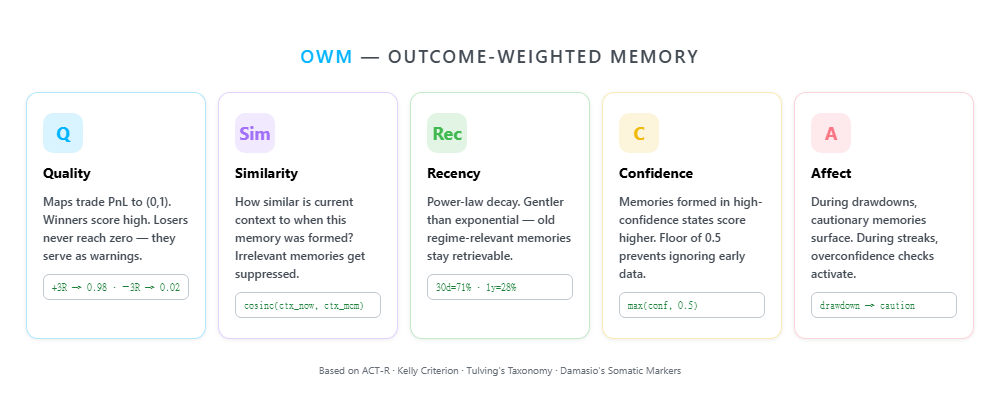
- Recall (เรียกคืน) — ก่อนเทรด ดึงข้อมูลการเทรดในอดีตโดยให้น้ำหนักตามคุณภาพผลลัพธ์ ความคล้ายคลึงของบริบท ความใหม่ล่าสุด ความมั่นใจ และสภาวะอารมณ์ (OWM Framework)
- Record (บันทึก) — หลังเทรด แค่เรียก
remember_tradeครั้งเดียวก็เขียนลงความจำห้าเลเยอร์: episodic, semantic, procedural, affective และบันทึกการเทรด - Reflect (สะท้อนผล) — การทบทวนรายวัน/รายสัปดาห์/รายเดือนตรวจจับความเบี่ยงเบนทางพฤติกรรม ความเสื่อมของกลยุทธ์ และความผิดพลาดในการเทรด
- Audit (ตรวจสอบ) — ทุกการตัดสินใจถูกแฮชด้วย SHA-256 ตั้งแต่สร้าง บันทึกได้ทุกเมื่อเพื่อการทบทวนหรือส่งให้หน่วยงานกำกับดูแล
เครื่องมือ MCP
| หมวดหมู่ | เครื่องมือ | คำอธิบาย |
|---|---|---|
| ความจำ | remember_trade · recall_memories | บันทึกและเรียกคืนการเทรดด้วยการให้คะแนนตามน้ำหนักผลลัพธ์ |
| สถานะ | get_agent_state · get_behavioral_analysis | ความมั่นใจ drawdown สตรีคการแพ้ รูปแบบพฤติกรรม |
| การวางแผน | create_trading_plan · check_active_plans | แผนล่วงหน้าพร้อมตัวกระตุ้นแบบมีเงื่อนไข |
| ความเสี่ยง | check_trade_legitimacy | เกตก่อนเทรด 5 ปัจจัย (เต็ม / ลดลง / ข้าม) |
| การตรวจสอบ | export_audit_trail · verify_audit_hash | การตรวจจับการแก้ไข SHA-256 + การส่งออกเป็นชุด |
เครื่องมือ MCP ทั้ง 20 ตัว + REST API
| หมวดหมู่ | เครื่องมือ |
|---|---|
| ความจำหลัก | get_strategy_performance · get_trade_reflection |
| OWM Cognitive | remember_trade · recall_memories · get_behavioral_analysis · get_agent_state · create_trading_plan · check_active_plans |
| ความเสี่ยงและการกำกับดูแล | check_trade_legitimacy · validate_strategy · compute_dqs |
| วิวัฒนาการ | evolution_fetch_market_data · evolution_discover_patterns · evolution_run_backtest · evolution_evolve_strategy · evolution_get_log |
| การตรวจสอบ | export_audit_trail · verify_audit_hash · verify_audit_chain · get_daily_root |
REST API: มากกว่า 35 endpoints สำหรับการบันทึกการเทรด การสะท้อนผล ความเสี่ยง การซิงก์ MT5, OWM, วิวัฒนาการ และการตรวจสอบ เอกสารอ้างอิงฉบับเต็ม →
การวิเคราะห์บันทึกการเทรด
TradeMemory ตัวมันเองฟรีและโฮสต์เองได้ สิ่งที่ผู้ดูแลระบบเสนอเป็นบริการแบบเสียเงินคือ การวิเคราะห์เชิงสถิติของบันทึกการเทรดของคุณเอง: ส่งออกประวัติ MT4/MT5 ของคุณแล้วรับรายงานสถิติเชิงพรรณนา — จุดที่ขาดทุนกระจุกตัว ขนาด position ของคุณเปลี่ยนแปลงอย่างไรหลังขาดทุน โครงสร้างการบังคับปิดสถานะ และความเสี่ยงจริงที่คุณรับต่อการเทรด — ตามด้วยการโทรอธิบายผล
สถิติเชิงพรรณนาของการเทรดในอดีตเท่านั้น: ไม่มีสัญญาณเทรด ไม่มีคำแนะนำการลงทุน ไม่มีการรับประกันผลตอบแทน ไฟล์ของคุณจะถูกลบหลังส่งมอบ
องค์กรและการปฏิบัติตามข้อกำหนด
ทุกการตัดสินใจเทรดที่เอเจนต์ของคุณทำ — รวมถึงการตัดสินใจ ไม่ เทรด — ถูกบันทึกเป็น Trading Decision Record (TDR) แฮชเนื้อหา SHA-256 ของแต่ละบันทึกถูกเชื่อมโยงเป็นบัญชีแยกประเภทการตรวจสอบแบบ forward-chained ทุกวัน UTC ถูกสรุปด้วย Merkle root ซึ่งเชื่อมโยงข้ามวันต่อเนื่องกัน การแก้ไขบันทึกทางประวัติศาสตร์ใด ๆ จะทำให้ลิงก์ถัดไปทั้งหมดไม่ถูกต้อง
| ข้อกำหนด | ความต้องการ | ความครอบคลุมของ TradeMemory |
|---|---|---|
| MiFID II Article 17 | บันทึกทุกปัจจัยการตัดสินใจเทรดแบบอัลกอริทึม | ห่วงโซ่การตัดสินใจครบถ้วน: เงื่อนไข ตัวกรอง ตัวชี้วัด การดำเนินการ |
| EU AI Act Article 14 | การกำกับดูแลโดยมนุษย์สำหรับระบบ AI ความเสี่ยงสูง | เหตุผลที่อธิบายได้ + บริบทความจำสำหรับทุกการตัดสินใจ |
| EU AI Act Article 12 | บันทึกอัตโนมัติ ทนทานต่อการแก้ไข ตลอดอายุระบบ | ห่วงโซ่ SHA-256 ที่เชื่อมโยง + Merkle roots รายวัน (RFC 3161 TSA ใน Phase 1.5) |
# Verify a single record hasn't been tampered with
verify_audit_hash(trade_id="MT5-7047640363")
# → {"verified": true, "chain_entry": {"sequence_num": 42, ...}}

# Walk the entire chain (or a slice) end-to-end
verify_audit_chain(from_seq=1, to_seq=None)
# → {"verified": true, "checked_count": 1284, "first_break_at": null}

# Daily Merkle root — single 32-byte anchor over every TDR for that day
get_daily_root(date="2026-05-14")
# → {"verified": true, "root_hash": "a05544...", "record_count": 18}

# Bulk export for regulatory submission
GET /audit/export?strategy=VolBreakout&start=2026-03-01&format=jsonl
ดู LIMITATIONS.md สำหรับคำชี้แจงความครบถ้วนของห่วงโซ่การตรวจสอบ รวมถึงสิ่งที่ยังไม่มีใน v0.5.2 (การประทับเวลา TSA การยึดเหนี่ยวภายนอก หลักฐาน zkML ของการอนุมาน)
ต้องการการปรับใช้แบบกำหนดเองสำหรับกองทุนของคุณ? → dev@mnemox.ai
ความปลอดภัย
- ไม่แตะต้อง API keys เด็ดขาด TradeMemory ไม่ได้ดำเนินการเทรด ไม่ย้ายเงิน และไม่เข้าถึงกระเป๋าเงิน
- อ่านและบันทึกเท่านั้น เอเจนต์ของคุณส่งบริบทการตัดสินใจให้ TradeMemory มันเก็บไว้ เท่านั้นจริง ๆ
- Local-first การเรียกออกไปภายนอกเพียงอย่างเดียวคือการประทับเวลา RFC 3161 ที่เชื่อถือได้ของรากการตรวจสอบรายวัน — แฮช 32 ไบต์ ไม่มีข้อมูลการเทรด (เปิดโดยค่าเริ่มต้น ปิดได้ด้วย
TRADEMEMORY_TSA=off) ไม่มีอะไรอื่นออกจากเครื่องของคุณ - บัญชีแยกประเภทการตรวจสอบแบบ SHA-256 เชื่อมโยง ทุกบันทึกถูกแฮชตั้งแต่สร้างและเชื่อมโยงกับบันทึกก่อนหน้า Merkle roots รายวันยึดเหนี่ยวห่วงโซ่ ตรวจสอบความถูกต้องได้ในระดับบันทึก ชิ้นส่วน หรือวัน การแก้ไขตรวจพบได้ในทุกระดับ การยึดเหนี่ยวภายนอก (TSA โดยค่าเริ่มต้น) อยู่ใน roadmap
- ผ่านการทดสอบ 1,400+ รายการ ชุดทดสอบเต็มรูปแบบพร้อม CI
สถานะงานวิจัย
เฟรมเวิร์ก OWM ของ TradeMemory มีรากฐานจากวิทยาศาสตร์การรู้คิด (Tulving 1972) และการเรียนรู้แบบเสริมกำลัง (Schaul et al. 2015) สถานะปัจจุบัน:
- การให้คะแนนห้าปัจจัย OWM: ใช้งานแล้ว ทดสอบแล้ว (1,400+ การทดสอบ)
- การตรวจสอบเชิงสถิติ: DSR, MBL ใช้งานแล้ว (Bailey-de Prado 2014)
- ร่องรอยการตรวจสอบ: TDR ที่ตรวจจับการแก้ไขด้วย SHA-256
- เอนจินวิวัฒนาการ: ระยะวิจัย (การสร้างกลยุทธ์ทำงานได้ อัตราการผ่านเกตสถิติอยู่ระหว่างการปรับให้เหมาะสม)
- การเรียกคืนแบบไฮบริด: โหมด OWM อย่างเดียวใช้งานอยู่ การรวมเวกเตอร์พร้อมใช้เมื่อตั้งค่า embeddings
- การตรวจสอบเชิงประจักษ์: กำลังดำเนินการ (n=14 เทรด เป้าหมาย n>=100 เพื่อนัยสำคัญทางสถิติ; ที่ n=14 ช่วงความเชื่อมั่นกว้างเกินไปที่จะสรุปอะไร — ดู validation/final_verdict.md)
เอกสารประกอบ
| เอกสาร | คำอธิบาย |
|---|---|
| Getting Started | ติดตั้ง → เทรดครั้งแรก → เช็กลิสต์ก่อนเทรด |
| Use Cases | 3 สถานการณ์การใช้งาน แต่ละอันระบุว่า first-party หรืออิสระ |
| API Reference | REST endpoints ทั้งหมด |
| OWM Framework | ทฤษฎีความจำแบบถ่วงน้ำหนักผลลัพธ์ |
| Architecture | การออกแบบระบบและการแยกเลเยอร์ |
| Tutorial | คำแนะนำแบบละเอียด |
| MT5 Setup | การผสานรวม MetaTrader 5 |
| Research Log | การทดลองวิวัฒนาการและข้อมูล |
| Failure Taxonomy | 11 รูปแบบความล้มเหลวของ AI เทรดดิ้ง |
| 中文版 | จีนตัวเต็ม |
การมีส่วนร่วม
ดู Contributing Guide · Security Policy
MIT — ดู LICENSE เพื่อการศึกษา/การวิจัยเท่านั้น ไม่ใช่คำแนะนำทางการเงิน