cie
Ein Code-Graph, der sich über pluggable Adapter auf jede Sprache erweitern lässt, mit Task-/QA-Rückverfolgbarkeit und echten MCP-Tools – ohne Konfiguration ausprobierbar.
Dokumentation
cie — the only code graph that knows which tasks and tests actually implement your code.
Where this is going: vision.md — the far shore. The graph becomes the software; repositories become its cache. Software that can always explain itself. A compass, not a claim.
















Code Insight Engine. No other surveyed code-graph tool can answer "which files implement this task, and are they tested?" as one query. Everything developer-facing lives in the wiki — architecture written from the codebase, and a how-to for every workflow. This README stays lean: the demo, the install, and how to help.
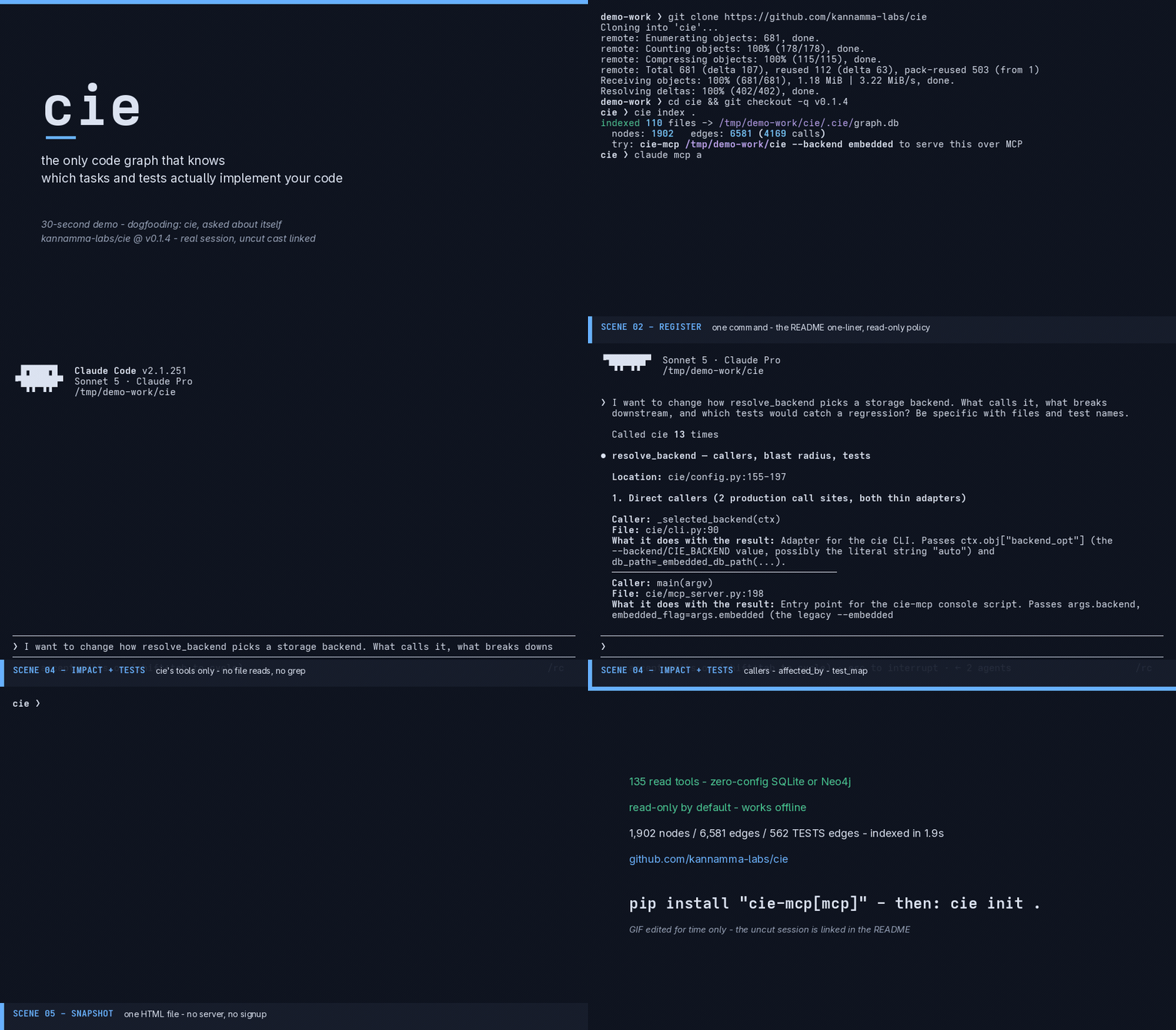
Every second is a real recorded session, nothing staged: this repo
cloned from the public tag v0.1.4, cie index . in 1.9s (1,902
nodes · 6,581 edges · 4,169 calls), the README one-liner registering it
with Claude Code (✔ Connected), then ONE question in plain words —
about resolve_backend, the storage-selection rule — answered from
cie's tools alone (the agent's built-ins were disabled for the take:
callers → affected_by → test_map were its only path). The agent
returned the 7 pinning tests with line numbers, including the test
added for the explicit-auto bug fixed that same day. The GIF is
edited for time only — content is never edited; the uncut sessions
ship in the repo:
resolve-backend-uncut.cast
(the agent take) and
setup-uncut.cast (index → register →
connected). Full take/QC record:
docs/demo/production-log.md.
Install
One-click, no clone, no Neo4j, no signup — install once from a release tag, then one command per project indexes it, registers cie with your MCP client (spawn-robust entry: absolute path, so GUI-launched clients find it), and writes the agent context files:
# once per machine (latest tag):
uv tool install "cie-mcp[mcp] @ git+https://github.com/kannamma-labs/cie.git@v0.1.5"

# per project — from inside the project:
cie index .        # ~1.9s on a 110-file repo
cie init .         # registers the client, writes AGENTS.md/CLAUDE.md
Already installed and prefer the client-side route?
claude mcp add cie -- $(command -v cie-mcp) /path/to/your/project --backend embedded --policy readonly
Plain pip works too:
pip install "cie-mcp[mcp]"   # core + MCP server (cie-mcp) — what most people want
pip install "cie-mcp[http]"  # + the HTTP tool-mount (cie/routes.py)
Package-name note (updated 2026-08-31, v0.1.1): the distribution ships as
cie-mcp— theciename on PyPI belongs to an unrelated project (cluster311/cie10, ICD-10 codes;pip install ciedoes NOT get you this tool — never did). Import package stayscie; console scripts staycieandcie-mcp. GitHub installs are an equal alternative:pip install "cie-mcp[mcp] @ git+https://github.com/kannamma-labs/cie.git@v0.1.5".
Core dependencies: Pydantic v2, tree-sitter (+ Python/JS/TS/Java/Go/
Rust/C/C++/C# grammars), watchdog, Click, Rich; the Neo4j driver only
when you use that backend. Python ≥ 3.10. Storage is auto-selected
(serve .cie/graph.db when you indexed, else Neo4j — stated on stderr
at startup, never silent).
More: serving to Cursor/Codex, multiple projects, Neo4j team mode, semantic search, HTTP, policies, troubleshooting — every workflow has a how-to in the wiki (start with install-and-serve).
Contributors wanted
cie is a small core with an outsized surface (135 tools, 9 languages, two storage backends, three front-ends) and a culture you can see in the commits: DoD = verified against the real environment, never written-only; misses get published, not hidden. The demo above was produced by dogfooding — and the dogfood measurement found (and fixed) a real product bug the same day. That's the working style.
Ways in, easiest first:
- Use it and report — index your repo, ask it impact questions, file what's wrong or what's missing. The troubleshoot how-to lists the known sharp edges honestly.
- A measured gap — the direct-calls TESTS heuristic shipped because a dogfood measurement showed 1 edge in a 308-test suite. Find a number like that, and the fix gets in.
- A first PR — start with the
good first issuelabel (each names a safe entry-point module and acceptance criteria) or issues #17–#19. - Docs — wiki how-tos count. If you wished a page existed, write it; if the wiki and code disagree, the code wins and the wiki gets a PR.
Dev setup is three commands (clone, uv venv + editable install,
python -m pytest -q — 312 passing): the details, the conformance
harness, and the honesty bar are in
CONTRIBUTING.md and the wiki's
contributing page.
CONTRIBUTING.md's "Becoming a second maintainer" section is the path
beyond a one-off PR.
License
cie is released under the MIT License.
By contributing, you agree your contributions are licensed under the same terms.