LAIN-mcp
Máy chủ MCP viết bằng Rust giúp các tác nhân AI mã hóa có nhận thức về kiến trúc — đồ thị tri thức bền vững, phân tích bán kính ảnh hưởng, phát hiện thay đổi đồng thời qua git và tìm kiếm ngữ nghĩa cục bộ. Không cần khóa API, chạy hoàn toàn tại chỗ.
Tài liệu
Lain
A code graph for coding agents. Lain maps callers, dependencies, symbols, and Git co-changes, then exposes them through the Model Context Protocol (MCP). Before an agent edits a function, it can inspect what depends on it and how the rest of the code reaches it.
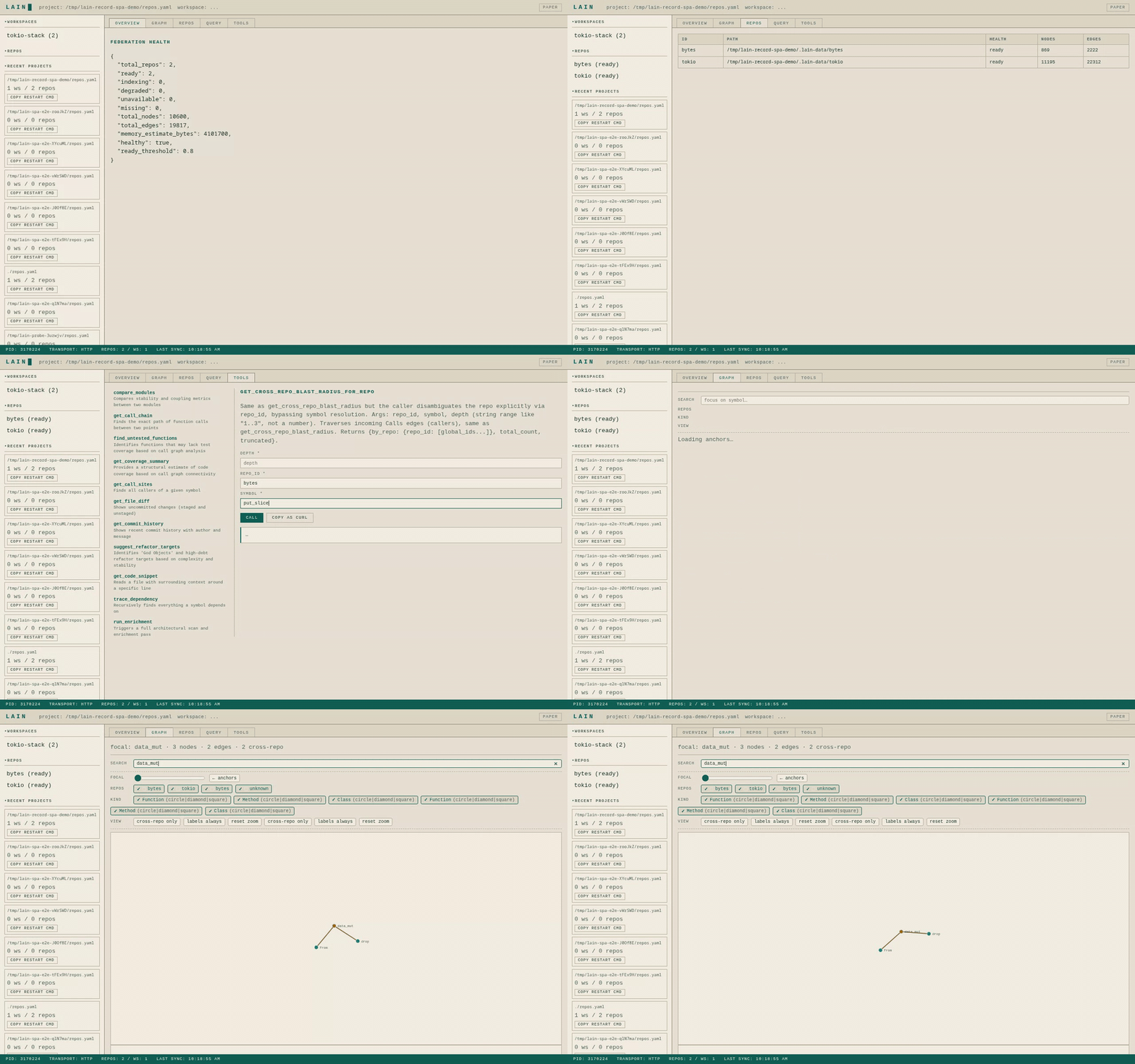
The demo traces a symbol across the bytes and tokio repositories. Agents
query the same graph through MCP; the browser shows what Lain indexed and where
an answer came from.
Ask your agent:
If I change validate_token, what breaks?
Show me the call chain from entry to helper_a.
Which files usually change with auth.rs?
Is another agent already editing this code?
Lain answers with symbol names and source paths from a local index. The index stays on disk between runs, updates when the code changes, and can cover more than one repository. Semantic search is optional; graph queries work without an embedding model.
Install
Using the release installer:
curl -fsSL https://raw.githubusercontent.com/spuentesp/lain/main/install.sh | bash
source ~/.zshrc   # or ~/.bashrc
lain --version
Rust 1.89 or newer is only needed when building from source. The quickstart covers non-interactive installation and the optional local embedding model.
Connect an agent
Run one setup command from the repository you want Lain to index:
lain setup --agent claude-code
lain setup --agent codex
lain setup --agent cursor
lain setup --agent vscode
lain setup --agent continue
Use lain setup --agent generic for another MCP host. It writes this
project-level .mcp.json, with the absolute path of the lain binary that
ran setup as command:
{
  "mcpServers": {
    "lain": {
      "command": "/home/you/.local/bin/lain",
      "args": ["mcp"]
    }
  }
}
Restart the agent after setup. Lain walks up from the agent's working directory
to find .git, builds .lain/graph.bin, and serves the repository over stdio.
No repos.yaml is needed for one repository.
Languages
Parsers for Rust, Python, TypeScript, JavaScript, Go, Java, C, C++, C#, Ruby,
Swift, Kotlin, Scala and PHP are built into the binary, as are the <script>
blocks of Vue and Svelte components. Every one gets definitions and a call
graph with nothing else installed.
Language servers are optional and only add precision. lain setup lists the
languages it found and asks which servers to install; pressing Enter installs
none. Non-interactive runs install none unless you name them:
lain setup --lsp python,go      # just these
lain setup --lsp detected       # every missing one for this repository
lain setup --lsp none
First query
Ask the connected agent:
Use Lain to show the blast radius of validate_token.
Or call the same tool from a terminal:
lain oneshot get_blast_radius validate_token
Use a symbol from your repository in place of validate_token. If the graph
isn't ready or an answer looks stale, run lain doctor.
Multiple repositories
lain repos add bytes https://github.com/tokio-rs/bytes.git
lain repos add tokio https://github.com/tokio-rs/tokio.git
lain workspaces create tokio-stack --members bytes,tokio
lain server --config ./repos.yaml --transport http --port 9999
Open http://localhost:9999 for the Command Center. The server listens on
localhost only; set LAIN_BIND_ADDR=0.0.0.0 (with LAIN_API_KEYS=key1,…)
to expose it on the network. Federation adds
organization-wide search and cross-repository blast-radius queries. The
federation guide covers configuration, source types, and
failure states. After a federation schema upgrade, run lain reindex to
rebuild the on-disk graph from the sources.
Check the graph
From a source checkout:
scripts/demo.sh --quick
The script creates a small repository with a known call graph, starts a real Lain server, and compares the answers with that graph. It exits non-zero when a check fails. A full run also records timings against this repository.
What Lain provides
| Need | Tool or feature |
|---|---|
| See callers before changing a symbol | get_blast_radius, assess_change |
| Trace how two functions connect | get_call_chain |
| Find architectural entry points | find_anchors, list_entry_points |
| Search by name or meaning | find_symbol, search_code |
| Follow a symbol across repositories | get_cross_repo_blast_radius, search_org |
| Keep agents from editing the same code blindly | intents, presence, and advisory file claims |
Static analysis can't prove every dynamic call through a message bus, dependency
injection container, or reflective router. explain_dispatch combines static
callers with convention matches, runtime traces, and Git co-change evidence; an
empty result becomes insufficient_evidence, not a claim that the edit is safe.
Documentation
| Start here | Covers |
|---|---|
| Quickstart | Installation, first query, and first aid |
| User manual | CLI reference, tuning, operation, and troubleshooting |
| Tool guide | MCP tools, arguments, outputs, and limits |
| Skill bundle | Agent-loadable skills and role recipes |
| Federation | Multi-repository configuration and queries |
| Multiplayer | Agent presence, intents, claims, and hooks |
| Architecture | Graph construction and design choices |
| Documentation index | Every maintained document |
Project status




License
MIT — Copyright (c) 2026 spuentesp