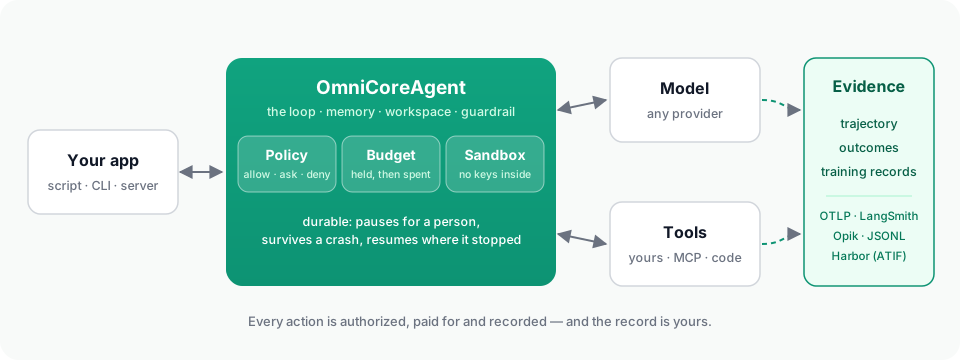
MCPOmni Connect

A universal command-line interface (CLI) gateway to the MCP ecosystem, integrating multiple MCP servers, AI models, and transport protocols.


๐ŸŽฌ See It In Action

import asyncio
from omnicoreagent import OmniCoreAgent, MemoryRouter, ToolRegistry

# Create tools in seconds
tools = ToolRegistry()

@tools.register_tool("get_weather")
def get_weather(city: str) -> dict:
    """Get current weather for a city."""
    return {"city": city, "temp": "22ยฐC", "condition": "Sunny"}

# Build a production-ready agent
agent = OmniCoreAgent(
    name="assistant",
    system_instruction="You are a helpful assistant with access to weather data.",
    model_config={"provider": "openai", "model": "gpt-4o"},
    local_tools=tools,
    memory_router=MemoryRouter("redis"),  # Start with Redis
    agent_config={
        "context_management": {"enabled": True},  # Auto-manage long conversations
        "guardrail_config": {"strict_mode": True},  # Block prompt injections
    }
)

async def main():
    # Run the agent
    result = await agent.run("What's the weather in Tokyo?")
    print(result["response"])
    
    # Switch to MongoDB at runtime โ€” no restart needed
    await agent.switch_memory_store("mongodb")
    
    # Keep running with a different backend
    result = await agent.run("How about Paris?")
    print(result["response"])

asyncio.run(main())

What just happened?

  • โœ… Registered a custom tool with type hints
  • โœ… Built an agent with memory persistence
  • โœ… Enabled automatic context management
  • โœ… Switched from Redis to MongoDB while running

โšก Quick Start

pip install omnicoreagent
echo "LLM_API_KEY=your_api_key" > .env
from omnicoreagent import OmniCoreAgent

agent = OmniCoreAgent(
    name="my_agent",
    system_instruction="You are a helpful assistant.",
    model_config={"provider": "openai", "model": "gpt-4o"}
)

result = await agent.run("Hello!")
print(result["response"])

That's it. You have an AI agent with session management, memory, and error handling.

๐Ÿ“š Want to learn more? Check out the Cookbook โ€” progressive examples from "Hello World" to production deployments.


๐ŸŽฏ What Makes OmniCoreAgent Different?

FeatureWhat It Means For You
Runtime Backend SwitchingSwitch Redis โ†” MongoDB โ†” PostgreSQL without restarting
Cloud Workspace StorageAgent files persist in AWS S3 or Cloudflare R2 โšก NEW
Context EngineeringSession memory + agent loop context + tool offloading = no token exhaustion
Tool Response OffloadingLarge tool outputs saved to files, 98% token savings
Built-in GuardrailsPrompt injection protection out of the box
MCP NativeConnect to any MCP server (stdio, SSE, HTTP with OAuth)
Background AgentsSchedule autonomous tasks that run on intervals
Workflow OrchestrationSequential, Parallel, and Router agents for complex tasks
Production ObservabilityMetrics, tracing, and event streaming built in

Getting Started: See It In Action โ€ข Quick Start

Core Features: OmniCoreAgent โ€ข Memory System โ€ข Context Engineering โ€ข Event System โ€ข MCP Client โ€ข Deep Agent โ€ข Local Tools โ€ข Agent Skills โ€ข Workspace Memory (S3/R2/Local)

Multi-Agent: Sub-Agents โ€ข Background Agents โ€ข Workflows

Production: BM25 Tool Retrieval โ€ข Observability โ€ข Guardrails โ€ข Model Support โ€ข OmniServe

Reference: Examples โ€ข Configuration โ€ข Testing โ€ข Contributing


๐Ÿ— Architecture Overview

OmniCoreAgent follows a layered architecture that separates concerns while enabling rich integrations between components. Here's how it all fits together:

flowchart TB
    %% Entry Points
    subgraph Entry["๐Ÿš€ Entry Points"]
        User([๐Ÿ‘ค User / App])
        Clock([โฐ Scheduler])
        API([๐ŸŒ External API])
    end

    %% Security Layer - First Line of Defense
    subgraph Security["๐Ÿ›ก๏ธ Security Layer"]
        Guard["Guardrails Engine<br/>โ”โ”โ”โ”โ”โ”โ”โ”โ”โ”โ”โ”โ”โ”<br/>โ€ข Pattern Matching<br/>โ€ข Heuristic Analysis<br/>โ€ข Entropy Detection<br/>โ€ข Encoding Detection"]
    end

    %% Orchestration Layer
    subgraph Orchestration["๐ŸŽผ Orchestration Layer"]
        direction LR
        WF["Workflow Engine"]
        SEQ["Sequential<br/>Agent"]
        PAR["Parallel<br/>Agent"]
        RTR["Router<br/>Agent"]
        BG["Background<br/>Agent"]

        WF --> SEQ
        WF --> PAR
        WF --> RTR
    end

    %% Core Engine - The Heart
    subgraph Core["๐Ÿง  OmniCore Engine"]
        direction TB
        OCA["OmniCoreAgent<br/>โ”โ”โ”โ”โ”โ”โ”โ”โ”โ”โ”โ”โ”โ”<br/>โ€ข System Instructions<br/>โ€ข Model Config<br/>โ€ข Agent Config"]
        
        subgraph Processing["Processing Pipeline"]
            direction LR
            CTX["Context<br/>Manager"]
            SUM["Conversation<br/>Summarizer"]
            REACT["ReAct<br/>Loop"]
            OFF["Tool Response<br/>Offloader"]
        end
        
        LLM["LLM Layer<br/>โ”โ”โ”โ”โ”โ”โ”โ”โ”โ”โ”โ”โ”โ”<br/>OpenAI โ€ข Anthropic<br/>Gemini โ€ข Groq โ€ข Ollama<br/>Mistral โ€ข DeepSeek"]
    end

    %% Capabilities Layer
    subgraph Capabilities["๐Ÿ› ๏ธ Capabilities Layer"]
        direction TB
        TOOLS["Tool Orchestration<br/>โ”โ”โ”โ”โ”โ”โ”โ”โ”โ”โ”โ”โ”โ”<br/>โ€ข Validation<br/>โ€ข Execution<br/>โ€ข Error Handling"]
        
        subgraph ToolTypes["Tool Types"]
            direction LR
            LOCAL["Local Tools<br/>(ToolRegistry)"]
            MCP["MCP Client<br/>(stdio/http/sse)"]
            BM25["BM25 RAG<br/>(Dynamic Discovery)"]
            SKILLS["Agent Skills<br/>(Polyglot Scripts)"]
            SUB["Sub-Agents<br/>(Delegation)"]
        end
    end

    %% Infrastructure Layer
    subgraph Infrastructure["๐Ÿ’พ Infrastructure Layer"]
        direction TB
        
        subgraph Routers["Routers (Hot-Swappable)"]
            direction LR
            MEM["Memory Router<br/>โ”โ”โ”โ”โ”โ”โ”โ”โ”โ”โ”โ”โ”โ”<br/>Session State<br/>Conversation History"]
            EVT["Event Router<br/>โ”โ”โ”โ”โ”โ”โ”โ”โ”โ”โ”โ”โ”โ”<br/>Real-time Streaming<br/>Audit Trail"]
        end
        
        subgraph Storage["Storage Backends"]
            direction LR
            REDIS[("Redis")]
            POSTGRES[("PostgreSQL")]
            MONGO[("MongoDB")]
            MEM_STORE[("In-Memory")]
            FS[("File System")]
        end
        
        OBS["Observability<br/>โ”โ”โ”โ”โ”โ”โ”โ”โ”โ”โ”โ”โ”โ”<br/>Metrics โ€ข Tracing<br/>Token Usage โ€ข Opik"]
    end

    %% Connections - Main Flow
    User --> Guard
    API --> Guard
    Clock --> BG
    
    Guard -->|"โœ“ Safe"| OCA
    Guard -->|"โœ— Blocked"| User
    
    BG --> OCA
    WF --> OCA
    SEQ --> OCA
    PAR --> OCA
    RTR --> OCA
    
    OCA --> CTX
    CTX <--> SUM
    CTX --> REACT
    REACT <--> LLM
    REACT --> TOOLS
    TOOLS --> OFF
    
    TOOLS --> LOCAL
    TOOLS --> MCP
    TOOLS --> BM25
    TOOLS --> SKILLS
    TOOLS --> SUB
    SUB -.->|"Recursive"| OCA
    
    %% Infrastructure Connections
    OCA <-.->|"State"| MEM
    OCA <-.->|"Events"| EVT
    OFF <-.->|"Artifacts"| FS
    
    MEM --> REDIS
    MEM --> POSTGRES
    MEM --> MONGO
    MEM --> MEM_STORE
    EVT --> REDIS
    
    OCA <-.->|"Metrics"| OBS

    %% Styling
    style Entry fill:#1abc9c,stroke:#16a085,color:#fff
    style Security fill:#e74c3c,stroke:#c0392b,color:#fff
    style Orchestration fill:#d35400,stroke:#e67e22,color:#fff
    style Core fill:#2c3e50,stroke:#34495e,color:#fff
    style Processing fill:#34495e,stroke:#2c3e50,color:#fff
    style Capabilities fill:#2980b9,stroke:#3498db,color:#fff
    style ToolTypes fill:#3498db,stroke:#2980b9,color:#fff
    style Infrastructure fill:#8e44ad,stroke:#9b59b6,color:#fff
    style Routers fill:#9b59b6,stroke:#8e44ad,color:#fff
    style Storage fill:#95a5a6,stroke:#7f8c8d,color:#fff

Layer Responsibilities

LayerPurposeKey Components
๐Ÿš€ EntryRequest sourcesUser Apps, Schedulers, External APIs
๐Ÿ›ก๏ธ SecurityThreat protectionGuardrails (injection detection, encoding checks)
๐ŸŽผ OrchestrationMulti-agent coordinationSequential, Parallel, Router, Background agents
๐Ÿง  Core EngineAgent executionReAct loop, Context Management, Summarization, LLM calls
๐Ÿ› ๏ธ CapabilitiesTool executionLocal tools, MCP, BM25 discovery, Skills, Sub-agents
๐Ÿ’พ InfrastructurePersistence & observabilityMemory/Event routers, Storage backends, Metrics

Data Flow Highlights

  1. Request Path: Entry โ†’ Security (guardrails) โ†’ Core โ†’ Capabilities โ†’ Response
  2. Memory Persistence: State flows bidirectionally between agent and storage backends
  3. Tool Offloading: Large responses saved to file system, only previews in context
  4. Event Streaming: Real-time events pushed to Redis Streams for monitoring

๐ŸŽฏ Core Features

1. ๐Ÿค– OmniCoreAgent โ€” The Heart of the Framework

from omnicoreagent import OmniCoreAgent, ToolRegistry, MemoryRouter, EventRouter

# Basic Agent
agent = OmniCoreAgent(
    name="assistant",
    system_instruction="You are a helpful assistant.",
    model_config={"provider": "openai", "model": "gpt-4o"}
)

# Production Agent with All Features
agent = OmniCoreAgent(
    name="production_agent",
    system_instruction="You are a production agent.",
    model_config={"provider": "openai", "model": "gpt-4o"},
    local_tools=tool_registry,
    mcp_tools=[...],
    memory_router=MemoryRouter("redis"),
    event_router=EventRouter("redis_stream"),
    agent_config={
        "max_steps": 20,
        "enable_advanced_tool_use": True,
        "enable_agent_skills": True,
        "memory_tool_backend": "local",
        # Memory with summarization
        "memory_config": {
            "mode": "sliding_window",
            "value": 10,
            "summary": {
                "enabled": True,
                "retention_policy": "summarize",
            },
        },
        # Context management for long conversations
        "context_management": {
            "enabled": True,
            "mode": "token_budget",
            "value": 100000,
            "threshold_percent": 75,
            "strategy": "summarize_and_truncate",
            "preserve_recent": 6,
        },
        # Prompt injection guardrails
        "guardrail_config": {
            "enabled": True,
            "strict_mode": True,
        },
    },
)


# Key Methods
await agent.run(query)                      # Execute task
await agent.run(query, session_id="user_1") # With session context
await agent.connect_mcp_servers()           # Connect MCP tools
await agent.list_all_available_tools()      # List all tools
await agent.switch_memory_store("mongodb")   # Switch backend at runtime!
await agent.get_session_history(session_id)      # Retrieve conversation history
await agent.clear_session_history(session_id)     # Clear history (session_id optional, clears all if None)
await agent.get_events(session_id)               # Get event history
await agent.get_memory_store_type()              # Get current memory router type
await agent.cleanup()                       # Clean up resources and remove the agent and the config
await agent.cleanup_mcp_servers()               # Clean up MCP servers without removing the agent and the config
await agent.get_metrics()                       # Get cumulative usage (tokens, requests, time)

[!TIP] Each agent.run() call now returns a metric field containing fine-grained usage for that specific request.

๐Ÿ’ก When to Use: OmniCoreAgent is your go-to for any AI task โ€” from simple Q&A to complex multi-step workflows. Start here for any agent project.

2. ๐Ÿง  Multi-Tier Memory System (Plug & Play)

5 backends with runtime switching โ€” start with Redis, switch to MongoDB, then PostgreSQL โ€” all on the fly!

from omnicoreagent import OmniCoreAgent, MemoryRouter

# Start with Redis
agent = OmniCoreAgent(
    name="my_agent",
    memory_router=MemoryRouter("redis"),
    model_config={"provider": "openai", "model": "gpt-4o"}
)

# Switch at runtime โ€” no restart needed!
agent.swith_memory_store("mongodb")     # Switch to MongoDB
agent.swith_memory_store("database")    # Switch to PostgreSQL/MySQL/SQLite
agent.swith_memory_store("in_memory")   # Switch to in-memory
agent.swith_memory_store("redis")       # Back to Redis
BackendUse CaseEnvironment Variable
in_memoryFast developmentโ€”
redisProduction persistenceREDIS_URL
databasePostgreSQL/MySQL/SQLiteDATABASE_URL
mongodbDocument storageMONGODB_URI

๐Ÿง  Conversation Summarization

OmniCoreAgent includes automatic conversation summarization to manage long conversation histories efficiently. When enabled, older messages are condensed into summaries, keeping context while reducing token usage.

from omnicoreagent import OmniCoreAgent, MemoryRouter

# Configure summarization with sliding window
memory_router = MemoryRouter(
    store_type="redis",
    memory_config={
        "mode": "sliding_window",  # or "token_budget"
        "value": 10,  # Keep last 10 messages (sliding_window) or max tokens (token_budget)
        "summary": {
            "enabled": True,
            "retention_policy": "keep"  # Options: "keep" or "delete"
        }
    }
)

agent = OmniCoreAgent(
    name="summarizing_agent",
    memory_router=memory_router,
    model_config={"provider": "openai", "model": "gpt-4o"}
)

Summarization Modes:

ModeDescriptionBest For
sliding_windowKeep last N messages, summarize older onesPredictable memory size
token_budgetKeep messages within token limitCost optimization

Retention Policies:

PolicyBehavior
keepMark summarized messages as inactive (recoverable)
deletePermanently remove summarized messages

How It Works:

  1. When conversation exceeds configured limit โ†’ summarization triggers
  2. Older messages are sent to LLM for summary generation
  3. Summary replaces older messages in active context
  4. Original messages are retained (with "keep") or deleted per policy

๐Ÿ’ก When to Use: Enable summarization for long-running conversations (support bots, research assistants) to maintain context while controlling costs. Use sliding_window for predictable behavior, token_budget for strict cost control.

3. ๐Ÿ”„ Context Engineering System

OmniCoreAgent implements state-of-the-art context engineering inspired by patterns from Anthropic and Cursor. This dual-layer approach ensures your agents never hit token limits โ€” even during marathon coding sessions or multi-step research tasks.

flowchart TB
    subgraph Input["๐Ÿ“ฅ Incoming Context"]
        MSG["Messages<br/>(User + Assistant + Tool)"]
        TOOL_RESP["Tool Responses<br/>(Web Search, APIs, Files)"]
    end

    subgraph Layer1["๐Ÿง  Layer 1: Agent Loop Context Management"]
        direction TB
        MONITOR["Context Monitor<br/>โ”โ”โ”โ”โ”โ”โ”โ”โ”โ”โ”โ”โ”โ”<br/>โ€ข Token counting<br/>โ€ข Message counting"]
        
        subgraph Modes["Management Modes"]
            direction LR
            TOKEN["token_budget<br/>โ”โ”โ”โ”โ”โ”โ”โ”โ”โ”<br/>Max total tokens"]
            SLIDE["sliding_window<br/>โ”โ”โ”โ”โ”โ”โ”โ”โ”โ”<br/>Max message count"]
        end
        
        subgraph Strategies["Overflow Strategies"]
            direction LR
            TRUNC["truncate<br/>โ”โ”โ”โ”โ”โ”โ”โ”<br/>Drop oldest<br/>(fast)"]
            SUMTRUNC["summarize_and_truncate<br/>โ”โ”โ”โ”โ”โ”โ”โ”โ”โ”โ”โ”โ”โ”<br/>Condense โ†’ Drop<br/>(preserves context)"]
        end
        
        RECENT["preserve_recent<br/>โ”โ”โ”โ”โ”โ”โ”โ”โ”โ”โ”โ”โ”โ”<br/>Always keep last N<br/>messages protected"]
    end

    subgraph Layer2["๐Ÿ’พ Layer 2: Tool Response Offloading"]
        direction TB
        CHECK["Size Check<br/>โ”โ”โ”โ”โ”โ”โ”โ”โ”โ”โ”โ”โ”โ”<br/>threshold_tokens: 500<br/>threshold_bytes: 2000"]
        
        subgraph Offload["Offload Process"]
            direction LR
            SAVE["Save to File<br/>(.omnicoreagent_artifacts/)"]
            PREVIEW["Generate Preview<br/>(first ~150 tokens)"]
        end
        
        subgraph Tools["Built-in Artifact Tools"]
            direction LR
            READ["read_artifact()"]
            TAIL["tail_artifact()"]
            SEARCH["search_artifact()"]
            LIST["list_artifacts()"]
        end
    end

    subgraph Output["๐Ÿ“ค Optimized Context"]
        CLEAN["Lean Context<br/>โ”โ”โ”โ”โ”โ”โ”โ”โ”โ”โ”โ”โ”โ”<br/>โ€ข System prompt<br/>โ€ข Recent messages<br/>โ€ข Summaries<br/>โ€ข Tool previews"]
    end

    %% Flow
    MSG --> MONITOR
    TOOL_RESP --> CHECK
    
    MONITOR --> TOKEN
    MONITOR --> SLIDE
    TOKEN --> TRUNC
    TOKEN --> SUMTRUNC
    SLIDE --> TRUNC
    SLIDE --> SUMTRUNC
    TRUNC --> RECENT
    SUMTRUNC --> RECENT
    
    CHECK -->|"> threshold"| SAVE
    CHECK -->|"โ‰ค threshold"| Output
    SAVE --> PREVIEW
    PREVIEW --> Tools
    Tools -.->|"On demand"| Output
    
    RECENT --> CLEAN
    PREVIEW --> CLEAN

    %% Styling
    style Input fill:#3498db,stroke:#2980b9,color:#fff
    style Layer1 fill:#2c3e50,stroke:#34495e,color:#fff
    style Modes fill:#34495e,stroke:#2c3e50,color:#fff
    style Strategies fill:#34495e,stroke:#2c3e50,color:#fff
    style Layer2 fill:#8e44ad,stroke:#9b59b6,color:#fff
    style Offload fill:#9b59b6,stroke:#8e44ad,color:#fff
    style Tools fill:#9b59b6,stroke:#8e44ad,color:#fff
    style Output fill:#27ae60,stroke:#2ecc71,color:#fff

How the Two Layers Work Together

LayerScopeWhat It ManagesWhen It Triggers
Context ManagementAgent loop messagesUser/Assistant conversation, tool call historyWhen context exceeds threshold_percent of limit
Tool OffloadingIndividual tool responsesLarge API responses, file contents, search resultsWhen response exceeds threshold_tokens

3.1 Agent Loop Context Management

Prevent token exhaustion during long-running tasks with automatic context management. When enabled, the agent monitors context size and applies truncation or summarization when thresholds are exceeded.

agent_config = {
    "context_management": {
        "enabled": True,
        "mode": "token_budget",  # or "sliding_window"
        "value": 100000,  # Max tokens (token_budget) or max messages (sliding_window)
        "threshold_percent": 75,  # Trigger at 75% of limit
        "strategy": "summarize_and_truncate",  # or "truncate"
        "preserve_recent": 4,  # Always keep last N messages
    }
}

Modes:

ModeDescriptionBest For
token_budgetManage by total token countCost control, API limits
sliding_windowManage by message countPredictable context size

Strategies:

StrategyBehaviorTrade-off
truncateDrop oldest messagesFast, no extra LLM calls
summarize_and_truncateSummarize then dropPreserves context, adds latency

3.2 Tool Response Offloading

Large tool responses are automatically saved to files, with only a preview in context. The agent can retrieve full content on demand using built-in tools.

agent_config = {
    "tool_offload": {
        "enabled": True,
        "threshold_tokens": 500,  # Offload responses > 500 tokens
        "max_preview_tokens": 150,  # Show first 150 tokens in context
        "storage_dir": ".omnicoreagent_artifacts"
    }
}

Token Savings Example:

Tool ResponseWithout OffloadingWith OffloadingSavings
Web search (50 results)~10,000 tokens~200 tokens98%
Large API response~5,000 tokens~150 tokens97%
File read (1000 lines)~8,000 tokens~200 tokens97%

Built-in Artifact Tools (automatically available when offloading is enabled):

ToolPurpose
read_artifact(artifact_id)Read full content when needed
tail_artifact(artifact_id, lines)Read last N lines (great for logs)
search_artifact(artifact_id, query)Search within large responses
list_artifacts()See all offloaded data in current session

Combined Power

Enable both for maximum efficiency:

agent = OmniCoreAgent(
    name="research_agent",
    agent_config={
        "context_management": {"enabled": True, "strategy": "summarize_and_truncate"},
        "tool_offload": {"enabled": True, "threshold_tokens": 500}
    }
)
# Result: Agents that can run indefinitely without token exhaustion

๐Ÿ’ก When to Use: Enable for long-running tasks (research, multi-step workflows) where context or tool responses can grow unbounded.

4. ๐Ÿ“ก Event System (Plug & Play)

Real-time event streaming with runtime switching:

from omnicoreagent import EventRouter

# Start with in-memory
agent = OmniCoreAgent(
    event_router=EventRouter("in_memory"),
    ...
)

# Switch to Redis Streams for production
agent.switch_event_store("redis_stream")
agent.get_event_store_type()                    # Get current event router type
# Stream events in real-time
async for event in agent.stream_events(session_id):
    print(f"{event.type}: {event.payload}")

Event Types: user_message, agent_message, tool_call_started, tool_call_result, final_answer, agent_thought, sub_agent_started, sub_agent_error, sub_agent_result

๐Ÿ’ก When to Use: Enable events when you need real-time monitoring, debugging, or building UIs that show agent progress. Essential for production observability.

5. ๐Ÿ”Œ Built-in MCP Client

Connect to any MCP-compatible service with support for multiple transport protocols and authentication methods.

Transport Types

1. stdio โ€” Local MCP servers (process communication)

{
    "name": "filesystem",
    "transport_type": "stdio",
    "command": "npx",
    "args": ["-y", "@modelcontextprotocol/server-filesystem", "/home"]
}

2. streamable_http โ€” Remote servers with HTTP streaming

# With Bearer Token
{
    "name": "github",
    "transport_type": "streamable_http",
    "url": "http://localhost:8080/mcp",
    "headers": {
        "Authorization": "Bearer your-token" # optional
    },
    "timeout": 60 # optional
}

# With OAuth 2.0 (auto-starts callback server on localhost:3000)
{
    "name": "oauth_server",
    "transport_type": "streamable_http",
    "auth": {
        "method": "oauth"
    },
    "url": "http://localhost:8000/mcp"
}

3. sse โ€” Server-Sent Events

{
    "name": "sse_server",
    "transport_type": "sse",
    "url": "http://localhost:3000/sse",
    "headers": {
        "Authorization": "Bearer token" # optional
    },
    "timeout": 60, # optional
    "sse_read_timeout": 120 # optional
}

Complete Example with All 3 Transport Types

agent = OmniCoreAgent(
    name="multi_mcp_agent",
    system_instruction="You have access to filesystem, GitHub, and live data.",
    model_config={"provider": "openai", "model": "gpt-4o"},
    mcp_tools=[
        # 1. stdio - Local filesystem
        {
            "name": "filesystem",
            "transport_type": "stdio",
            "command": "npx",
            "args": ["-y", "@modelcontextprotocol/server-filesystem", "/home"]
        },
        # 2. streamable_http - Remote API (supports Bearer token or OAuth)
        {
            "name": "github",
            "transport_type": "streamable_http",
            "url": "http://localhost:8080/mcp",
            "headers": {"Authorization": "Bearer github-token"},
            "timeout": 60
        },
        # 3. sse - Real-time streaming
        {
            "name": "live_data",
            "transport_type": "sse",
            "url": "http://localhost:3000/sse",
            "headers": {"Authorization": "Bearer token"},
            "sse_read_timeout": 120
        }
    ]
)

await agent.connect_mcp_servers()
tools = await agent.list_all_available_tools()  # All MCP + local tools
result = await agent.run("List all Python files and get latest commits")

Transport Comparison

TransportUse CaseAuth Methods
stdioLocal MCP servers, CLI toolsNone (local process)
streamable_httpRemote APIs, cloud servicesBearer token, OAuth 2.0
sseReal-time data, streamingBearer token, custom headers

๐Ÿ’ก When to Use: Use MCP when you need to connect to external tools and services. Choose stdio for local CLI tools, streamable_http for REST APIs, and sse for real-time streaming data.


6. ๐Ÿง  DeepAgent (Multi-Agent Orchestration)

DeepAgent = OmniCoreAgent + Multi-Agent Orchestration

DeepAgent automatically breaks down complex tasks and delegates them to specialized subagents running in parallel. The lead agent coordinates the work and synthesizes findings from memory.


โšก Quick Start

from omnicoreagent import DeepAgent

# Create a DeepAgent for any domain
agent = DeepAgent(
    name="research_coordinator",
    system_instruction="You are a tech research coordinator.",
    model_config={"provider": "openai", "model": "gpt-4o"},
)

await agent.initialize()  # Required: Registers orchestration tools

# Run complex query โ€” automatically spawns subagents
result = await agent.run("""
Research the benefits of Rust vs Go for cloud-native applications.
Consider performance, developer experience, and ecosystem maturity.
""")

# DeepAgent spawns 3 parallel subagents:
# - Performance researcher
# - DevEx analyst  
# - Ecosystem analyst

await agent.cleanup()

๐Ÿ”ง Configuration Options

ConfigDefaultDescription
max_steps50Max reasoning steps (increase for complex orchestration)
tool_call_timeout600Timeout per tool call in seconds (10 min for deep work)
memory_tool_backend"local"Always "local" โ€” enforced for orchestration
context_management.enabledtrueAuto-manage context window
tool_offload.enabledtrueOffload large tool responses
# Complete DeepAgent configuration
agent = DeepAgent(
    name="ResearchCoordinator",
    system_instruction="You are a strategic research analyst.",
    model_config={"provider": "openai", "model": "gpt-4o"},
    agent_config={
        "max_steps": 100,  # More steps for complex orchestration
        "tool_call_timeout": 600,  # 10 min timeout for subagents
        # memory_tool_backend is ALWAYS "local" (enforced)
    },
    debug=True,  # Enable debug logging
)

[!IMPORTANT] memory_tool_backend is always "local" for DeepAgent. This cannot be overridden โ€” it's required for the memory-based orchestration workflow.


๐Ÿ› ๏ธ Built-in Orchestration Tools

DeepAgent automatically provides these tools to the lead agent:

ToolPurposeParameters
spawn_subagentSpawn a single focused subagentname, instruction, task
spawn_parallel_subagentsSpawn multiple subagents in parallel[{name, instruction, task}, ...]

Subagents inherit from parent:

  • Model configuration
  • MCP and local tools
  • Agent config (context management, tool offload, etc.)

Example: Manual subagent spawning (usually automatic):

# The lead agent can explicitly spawn subagents via tools:
# 1. Single subagent
spawn_subagent(
    name="market_researcher",
    instruction="You are a market research specialist.",
    task="Research AI DevOps market size and growth trends"
)

# 2. Parallel subagents
spawn_parallel_subagents([
    {"name": "tech_analyst", "instruction": "...", "task": "Analyze technology trends"},
    {"name": "competitor_analyst", "instruction": "...", "task": "Map competitor landscape"},
    {"name": "pricing_analyst", "instruction": "...", "task": "Research pricing models"},
])

๐Ÿ”„ RPI+ Workflow (Advanced Orchestration)

For complex tasks, DeepAgent implements the RPI+ workflow:

1. Meta-Assessment    โ†’ Evaluate task complexity before choosing strategy
2. Research           โ†’ Broad landscape exploration
3. Plan               โ†’ Strategic decomposition with quality gates
4. Implement          โ†’ Parallel subagent execution
5. Verify             โ†’ Gap analysis + confidence scoring
6. Iterate            โ†’ Surgical refinement when thresholds not met
7. Synthesize         โ†’ Cross-cutting insights with source citations

Architecture Flow:

User Query โ†’ Lead Agent โ†’ Spawn Subagents (parallel)
                โ†“
            [Subagent A] โ†’ Write to /memories/subtask_a/
            [Subagent B] โ†’ Write to /memories/subtask_b/
            [Subagent C] โ†’ Write to /memories/subtask_c/
                โ†“
Lead Agent reads memory โ†’ Synthesize โ†’ Final Answer

Why Memory-First?

  • Survives context resets
  • Enables true parallel execution
  • No context bloat from intermediate results

๐ŸŒ DeepAgent with MCP Tools

from omnicoreagent import DeepAgent

# DeepAgent with Tavily web search
agent = DeepAgent(
    name="MarketResearcher",
    system_instruction="You are a strategic market research analyst.",
    model_config={"provider": "gemini", "model": "gemini-2.5-pro"},
    mcp_tools=[
        {
            "name": "tavily",
            "transport_type": "stdio",
            "command": "npx",
            "args": ["-y", "mcp-remote", f"https://mcp.tavily.com/mcp/?tavilyApiKey={TAVILY_KEY}"],
        }
    ],
    agent_config={
        "max_steps": 100,
    },
)

await agent.initialize()
result = await agent.run("Comprehensive market analysis of AI DevOps tools in 2026")
await agent.cleanup()

DeepAgent vs OmniCoreAgent

FeatureOmniCoreAgentDeepAgent
DomainUser-definedUser-defined (same)
ToolsUser-providedUser-provided + orchestration
Memory BackendOptionalAlways "local" (enforced)
OrchestrationNoAutomatic subagent spawning
Best ForSingle-agent tasksComplex multi-step analysis

When to use DeepAgent:

  • โœ… Multi-domain research (tech + market + legal)
  • โœ… Parallel analysis (compare multiple options)
  • โœ… Complex synthesis (aggregate findings from multiple sources)
  • โœ… Long-running investigations

When to use OmniCoreAgent:

  • โœ… Simple Q&A
  • โœ… Single-perspective tasks
  • โœ… Direct tool execution
  • โœ… Chat interfaces

๐Ÿ“š Learn More: See DeepAgent Cookbook for complete examples.

๐Ÿ’ก When to Use: Use DeepAgent when your tasks may benefit from multi-agent orchestration (parallel research, divide-and-conquer analysis, multi-domain expertise).

7. ๐Ÿ› ๏ธ Local Tools System

Register any Python function as an AI tool:

from omnicoreagent import ToolRegistry

tools = ToolRegistry()

@tools.register_tool("get_weather")
def get_weather(city: str) -> str:
    """Get weather for a city."""
    return f"Weather in {city}: Sunny, 25ยฐC"

@tools.register_tool("calculate_area")
def calculate_area(length: float, width: float) -> str:
    """Calculate rectangle area."""
    return f"Area: {length * width} square units"

agent = OmniCoreAgent(
    name="tool_agent",
    local_tools=tools,  # Your custom tools!
    ...
)

๐Ÿ’ก When to Use: Use Local Tools when you need custom business logic, internal APIs, or any Python functionality that isn't available via MCP servers.


8. ๐Ÿงฉ Agent Skills System (Packaged Capabilities)

OmniCoreAgent supports the Agent Skills specification โ€” self-contained capability packages that provide specialized knowledge, executable scripts, and documentation.

agent_config = {
    "enable_agent_skills": True  # Enable discovery and tools for skills
}

Key Concepts:

  • Discovery: Agents automatically discover skills installed in .agents/skills/[skill-name].
  • Activation (SKILL.md): Agents are instructed to read the "Activation Document" first to understand how to use the skill's specific capabilities.
  • Polyglot Execution: The run_skill_script tool handles scripts in Python, JavaScript/Node, TypeScript, Ruby, Perl, and Shell (bash/sh).

Directory Structure:

.agents/skills/my-skill-name/
โ”œโ”€โ”€ SKILL.md        # The "Activation" document (instructions + metadata)
โ”œโ”€โ”€ scripts/        # Multi-language executable scripts
โ”œโ”€โ”€ references/     # Deep-dive documentation
โ””โ”€โ”€ assets/         # Templates, examples, and resources

Skill Tools:

  • read_skill_file(skill_name, file_path): Access any file within a skill (start with SKILL.md).
  • run_skill_script(skill_name, script_name, args?): Execute bundled scripts with automatic interpreter detection.

๐Ÿ“š Learn More: To learn how to create your own agent skills, visit agentskills.io.


9. ๐Ÿ’พ Workspace Memory โ€” Persistent File Storage for Agents

NEW: Cloud Storage Support! Your agents can now store files on AWS S3 or Cloudflare R2 for production-grade, distributed persistence.

A persistent file storage system that gives your agents a dedicated workspace to save, manage, and share files across sessions. Choose from local filesystem for development, or cloud storage (S3/R2) for production deployments where files need to persist across servers, scale globally, and survive restarts.

Storage Backends

BackendUse CaseBenefits
localDevelopment, single-serverZero config, instant setup
s3Production, AWS infrastructureScalable, durable, global access
r2Production, edge computingZero egress fees, Cloudflare ecosystem

Quick Setup

# Local storage (development)
agent_config = {
    "memory_tool_backend": "local"
}

# AWS S3 storage (production)
agent_config = {
    "memory_tool_backend": "s3"
}

# Cloudflare R2 storage (production)
agent_config = {
    "memory_tool_backend": "r2"
}

Environment Variables

For S3:

AWS_S3_BUCKET=my-agent-memories
AWS_ACCESS_KEY_ID=AKIA...
AWS_SECRET_ACCESS_KEY=your-secret
AWS_REGION=us-east-1  # optional, defaults to us-east-1

For R2:

R2_BUCKET_NAME=my-agent-memories
R2_ACCOUNT_ID=your-cloudflare-account-id
R2_ACCESS_KEY_ID=your-r2-key
R2_SECRET_ACCESS_KEY=your-r2-secret

Agent Memory Tools

When enabled, your agent automatically gets these tools:

ToolPurpose
memory_viewView/list files in memory workspace
memory_create_updateCreate, append, or overwrite files
memory_str_replaceFind and replace text within files
memory_insertInsert text at specific line numbers
memory_deleteDelete files from workspace
memory_renameRename or move files
memory_clear_allClear entire workspace

Production Features

FeatureLocalS3R2
Persistent across restartsโœ…โœ…โœ…
Multi-server accessโŒโœ…โœ…
Global CDN distributionโŒโœ…โœ…
Zero egress feesN/AโŒโœ…
Auto-retry on failureโŒโœ…โœ…
Concurrent access safetyโœ…โœ…โœ…

Use Cases

Use CaseRecommended Backend
Local developmentlocal
Single-server productionlocal or s3
Multi-server / Kubernetess3 or r2
Edge computing / Workersr2
Cost-sensitive workloadsr2 (zero egress)

Example: Research Agent with Cloud Storage

import os

# Set environment for S3
os.environ["AWS_S3_BUCKET"] = "research-agent-memories"
os.environ["AWS_ACCESS_KEY_ID"] = "AKIA..."
os.environ["AWS_SECRET_ACCESS_KEY"] = "..."
os.environ["AWS_REGION"] = "us-east-1"
os.environ["AWS_ENDPOINT_URL"] = "https://s3.amazonaws.com" # Optional

agent = OmniCoreAgent(
    name="research_agent",
    system_instruction="You are a research assistant. Save your findings to memory.",
    model_config={"provider": "openai", "model": "gpt-4o"},
    agent_config={
        "memory_tool_backend": "s3",  # Files persist in S3
        "max_steps": 50,
    }
)

# Agent can now save research notes that persist across:
# - Server restarts
# - Multiple instances
# - Different geographic locations
result = await agent.run(
    "Research the latest AI developments and save a summary to /notes/ai_trends_2024.md"
)

๐Ÿ’ก When to Use: Use local for development. Use s3 or r2 when you need:

  • Files to persist across server restarts
  • Multiple agent instances accessing the same workspace
  • Global teams accessing shared agent knowledge
  • Production-grade durability and reliability

10. ๐Ÿ‘ฅ Sub-Agents System

Delegate tasks to specialized child agents:

weather_agent = OmniCoreAgent(name="weather_agent", ...)
filesystem_agent = OmniCoreAgent(name="filesystem_agent", mcp_tools=MCP_TOOLS, ...)

parent_agent = OmniCoreAgent(
    name="parent_agent",
    sub_agents=[weather_agent, filesystem_agent],
    ...
)

๐Ÿ’ก When to Use: Use Sub-Agents when you have specialized agents (e.g., weather, code, data) and want a parent agent to delegate tasks intelligently. Great for building modular, reusable agent architectures.


11. ๐Ÿ•ฐ๏ธ Background Agents

Autonomous agents that run on varying schedules (Interval or Cron) or process tasks from a persistent queue.

from omnicoreagent import BackgroundAgentManager, MemoryRouter, EventRouter
    
# Initialize the manager
manager = BackgroundAgentManager(
    memory_router=MemoryRouter("redis"),
    event_router=EventRouter("redis_stream")
)
    
# Create a background agent
background_agent_config = {
    "agent_id": "system_monitor",
    "system_instruction": "Monitor system resources and report anomalies.",
    "model_config": {"provider": "openai", "model": "gpt-4o-mini"},
    "queue_size": 10,  # Max pending tasks
    # Schedule options:
    "interval": 300,        # Integer = seconds (every 5 mins)
    # "interval": "* * * * *", # String = Cron expression (every minute)
    "task_config": {
        "query": "Check metrics and alert if CPU > 80%",
        "timeout": 60,      # Kill task if it hangs
        "max_retries": 3,
        "retry_delay": 10
    }
}
await manager.create_agent(background_agent_config)
    
# Start the system
await manager.start()

# Trigger manually if needed
await manager.run_task_now("system_monitor", {"query": "Immediate check!"})

๐Ÿ“š Deep Dive: Check out the Background Agents Cookbook for full "Kitchen Sink" examples including lifecycle management (pause/resume/delete) and advanced configuration.

๐Ÿ› ๏ธ Comprehensive API Reference

BackgroundAgentManager (Orchestrator)

Lifecycle Management

  • await manager.create_agent(config: Dict) -> Dict: Create, register, and schedule a new background agent.
  • await manager.start(): Start the manager and all scheduled agents.
  • await manager.shutdown(): Gracefully stop the manager and all agents.
  • await manager.start_agent(agent_id): Start (schedule) a specific agent.
  • await manager.stop_agent(agent_id): Stop (unschedule) a specific agent.
  • await manager.pause_agent(agent_id): Pause an agent's schedule without stopping its worker.
  • await manager.resume_agent(agent_id): Resume a paused agent's schedule.
  • await manager.delete_agent(agent_id): Stop, cleanup, and remove an agent completely.

Task Management

  • await manager.register_task(agent_id, task_config): Register or update a task for an agent.
  • await manager.run_task_now(agent_id, task_config): Trigger an immediate execution outside the schedule.
  • await manager.register_and_run(agent_id, task_config): Register a task and run it immediately.
  • await manager.update_task_config(agent_id, task_config): Update an existing task configuration.
  • await manager.remove_task(agent_id): Remove a task configuration.
  • await manager.list_tasks(): List all agents with registered tasks.

Status & Monitoring

  • await manager.get_agent_status(agent_id): Get comprehensive status (running, scheduled, last run, errors).
  • await manager.get_manager_status(): Get overall system status (total agents, running count, resource usage).
  • await manager.list_agents(): List all registered agent IDs.
  • await manager.is_agent_running(agent_id): Check if an agent is currently executing a task.
  • await manager.get_running_agents(): List all currently executing agents.
  • await manager.get_agent_metrics(agent_id): Get performance metrics (run count, errors, timestamps).
  • await manager.get_all_metrics(): Get metrics for all agents.

Configuration & Information

  • await manager.update_agent_config(agent_id, new_config): Update agent settings (including model/tools).
  • await manager.get_task_config(agent_id): Retrieve current task configuration.
  • await manager.get_agent(agent_id): Access the raw BackgroundOmniCoreAgent instance.
  • await manager.get_agent_event_info(agent_id): Get event stream connection details.
  • await manager.get_all_event_info(): Get event info for all agents and shared stores.
  • await manager.get_agent_session_id(agent_id): Get the persistent session ID.
  • await manager.get_all_session_ids(): Get a map of all agent session IDs.

BackgroundOmniCoreAgent (The Workers)

Execution & Control

  • await agent.submit_task(task_config): Queue a task for reliable execution.
  • await agent.run_task(task_config): Interface for scheduler/manual triggers.
  • await agent.start_worker(): Start the background task processing loop.
  • await agent.stop_worker(): Gracefully stop the background worker.
  • property agent.is_worker_running: Check if the worker loop is active.
  • await agent.connect_mcp_servers(): Establish connections to configured MCP tools.
  • await agent.cleanup(): comprehensive cleanup of resources, connections, and tasks.

State & Visibility

  • await agent.get_status(): Get health, configuration, and execution state.
  • await agent.get_session_id(): Get the persistent session ID.
  • await agent.has_task(): Check if a valid task is registered.
  • await agent.get_task_query(): Get the current query/instruction being executed.
  • await agent.get_task_config(): Get the full task configuration dict.

Events & Streaming

  • await agent.stream_events(session_id): Real-time event generator.
  • await agent.get_events(session_id): Retrieve past event history.
  • await agent.get_event_stream_info(): Connection details for external consumers.
  • await agent.update_config(new_config): Hot-reload agent configuration.

๐Ÿ’ก When to Use: Perfect for scheduled tasks like system monitoring, periodic reports, data syncing, or any automation that runs independently without user interaction.


12. ๐Ÿ”„ Workflow Agents

Orchestrate multiple agents for complex tasks:

from omnicoreagent import SequentialAgent, ParallelAgent, RouterAgent

# Sequential: Chain agents step-by-step
seq_agent = SequentialAgent(sub_agents=[agent1, agent2, agent3])
result = await seq_agent.run(initial_task="Analyze and report")

# Parallel: Run agents concurrently
par_agent = ParallelAgent(sub_agents=[agent1, agent2, agent3])
results = await par_agent.run(agent_tasks={
    "analyzer": "Analyze data",
    "processor": "Process results"
})

# Router: Intelligent task routing
router = RouterAgent(
    sub_agents=[code_agent, data_agent, research_agent],
    model_config={"provider": "openai", "model": "gpt-4o"}
)
result = await router.run(task="Find and summarize AI research")

๐Ÿ’ก When to Use:

  • SequentialAgent: When tasks depend on each other (output of one โ†’ input of next)
  • ParallelAgent: When tasks are independent and can run simultaneously for speed
  • RouterAgent: When you need intelligent task routing to specialized agents

13. ๐Ÿง  Advanced Tool Use (BM25 Retrieval)

Automatically discover relevant tools at runtime using BM25 lexical search:

agent_config = {
    "enable_advanced_tool_use": True  # Enable BM25 retrieval
}

How It Works:

  1. All MCP tools loaded into in-memory registry
  2. BM25 index built over tool names, descriptions, parameters
  3. User task used as search query
  4. Top 5 relevant tools dynamically injected

Benefits: Scales to 1000+ tools, zero network I/O, deterministic, container-friendly.

๐Ÿ’ก When to Use: Enable when you have many MCP tools (10+) and want the agent to automatically discover the right tools for each task without manual selection.


14. ๐Ÿ“Š Production Observability & Metrics

๐Ÿ“ˆ Real-time Usage Metrics

OmniCoreAgent tracks every token, request, and millisecond. Each run() returns a metric object, and you can get cumulative stats anytime.

result = await agent.run("Analyze this data")
print(f"Request Tokens: {result['metric'].request_tokens}")
print(f"Time Taken: {result['metric'].total_time:.2f}s")

# Get aggregated metrics for the agent's lifecycle
stats = await agent.get_metrics()
print(f"Avg Response Time: {stats['average_time']:.2f}s")

๐Ÿ” Opik Tracing

Monitor and optimize your agents with deep traces:

# Add to .env
OPIK_API_KEY=your_opik_api_key
OPIK_WORKSPACE=your_workspace

What's Tracked: LLM call performance, tool execution traces, memory operations, agent workflow, bottlenecks.

Agent Execution Trace:
โ”œโ”€โ”€ agent_execution: 4.6s
    โ”œโ”€โ”€ tools_registry_retrieval: 0.02s โœ…
    โ”œโ”€โ”€ memory_retrieval_step: 0.08s โœ…
    โ”œโ”€โ”€ llm_call: 4.5s โš ๏ธ (bottleneck!)
    โ””โ”€โ”€ action_execution: 0.03s โœ…

๐Ÿ’ก When to Use: Essential for production. Use Metrics for cost/performance monitoring, and Opik for identifying bottlenecks and debugging complex agent logic.


15. ๐Ÿ›ก๏ธ Prompt Injection Guardrails

Protect your agents against malicious inputs, jailbreaks, and instruction overrides before they reach the LLM.

agent_config = {
    "guardrail_config": {
        "strict_mode": True,      # Block all suspicious inputs
        "sensitivity": 0.85,      # 0.0 to 1.0 (higher = more sensitive)
        "enable_pattern_matching": True,
        "enable_heuristic_analysis": True
    }
}

agent = OmniCoreAgent(..., agent_config=agent_config)

# If a threat is detected:
# result['response'] -> "I'm sorry, but I cannot process this request due to safety concerns..."
# result['guardrail_result'] -> Full metadata about the detected threat

Key Protections:

  • Instruction Overrides: "Ignore previous instructions..."
  • Jailbreaks: DAN mode, roleplay escapes, etc.
  • Toxicity & Abuse: Built-in pattern recognition.
  • Payload Splitting: Detects fragmented attack attempts.

โš™๏ธ Configuration Options

ParameterTypeDefaultDescription
strict_modeboolFalseWhen True, any detection (even low confidence) blocks the request.
sensitivityfloat1.0Scaling factor for threat scores (0.0 to 1.0). Higher = more sensitive.
max_input_lengthint10000Maximum allowed query length before blocking.
enable_encoding_detectionboolTrueDetects base64, hex, and other obfuscation attempts.
enable_heuristic_analysisboolTrueAnalyzes prompt structure for typical attack patterns.
enable_sequential_analysisboolTrueChecks for phased attacks across multiple tokens.
enable_entropy_analysisboolTrueDetects high-entropy payloads common in injections.
allowlist_patternslist[]List of regex patterns that bypass safety checks.
blocklist_patternslist[]Custom regex patterns to always block.

๐Ÿ’ก When to Use: Always enable in user-facing applications to prevent prompt injection attacks and ensure agent reliability.


16. ๐ŸŒ Universal Model Support

Model-agnostic through LiteLLM โ€” use any provider:

# OpenAI
model_config = {"provider": "openai", "model": "gpt-4o"}

# Anthropic
model_config = {"provider": "anthropic", "model": "claude-3-5-sonnet-20241022"}

# Groq (Ultra-fast)
model_config = {"provider": "groq", "model": "llama-3.1-8b-instant"}

# Ollama (Local)
model_config = {"provider": "ollama", "model": "llama3.1:8b", "ollama_host": "http://localhost:11434"}

# OpenRouter (200+ models)
model_config = {"provider": "openrouter", "model": "anthropic/claude-3.5-sonnet"}

#mistral ai
model_config = {"provider": "mistral", "model": "mistral-7b-instruct"}

#deepseek
model_config = {"provider": "deepseek", "model": "deepseek-chat"}

#google gemini
model_config = {"provider": "google", "model": "gemini-2.0-flash-exp"}

#azure openai
model_config = {"provider": "azure_openai", "model": "gpt-4o"}

Supported: OpenAI, Anthropic, Google Gemini, Groq, DeepSeek, Mistral, Azure OpenAI, OpenRouter, Ollama

๐Ÿ’ก When to Use: Switch providers based on your needs โ€” use cheaper models (Groq, DeepSeek) for simple tasks, powerful models (GPT-4o, Claude) for complex reasoning, and local models (Ollama) for privacy-sensitive applications.


17. ๐Ÿš€ OmniServe โ€” Production API Server

Turn any agent into a production-ready REST/SSE API with a single command.


๐Ÿ“ฆ Agent File Requirements

To use OmniServe with your agent, your Python file must define one of the following:

# Option 1: Define an `agent` variable
from omnicoreagent import OmniCoreAgent

agent = OmniCoreAgent(
    name="MyAgent",
    system_instruction="You are a helpful assistant.",
    model_config={"provider": "gemini", "model": "gemini-2.0-flash"},
)
# Option 2: Define a `create_agent()` function
from omnicoreagent import OmniCoreAgent

def create_agent():
    """Factory function that returns an agent instance."""
    return OmniCoreAgent(
        name="MyAgent",
        system_instruction="You are a helpful assistant.",
        model_config={"provider": "gemini", "model": "gemini-2.0-flash"},
    )

[!IMPORTANT] OmniServe looks for agent variable first, then create_agent() function. Your file must export one of these.


โšก Quick Start (Step-by-Step)

Step 1: Create your agent file (my_agent.py)

from omnicoreagent import OmniCoreAgent, ToolRegistry

tools = ToolRegistry()

@tools.register_tool("greet")
def greet(name: str) -> str:
    """Greet someone by name."""
    return f"Hello, {name}!"

@tools.register_tool("calculate")
def calculate(expression: str) -> dict:
    """Evaluate a math expression."""
    import math
    result = eval(expression, {"__builtins__": {}}, {"sqrt": math.sqrt, "pi": math.pi})
    return {"expression": expression, "result": result}

agent = OmniCoreAgent(
    name="MyAgent",
    system_instruction="You are a helpful assistant with access to greeting and calculation tools.",
    model_config={"provider": "gemini", "model": "gemini-2.0-flash"},
    local_tools=tools,
)

Step 2: Set environment variables

echo "LLM_API_KEY=your_api_key_here" > .env

Step 3: Run the server

omniserve run --agent my_agent.py

Step 4: Test the API

# Health check
curl http://localhost:8000/health

# Run a query (sync)
curl -X POST http://localhost:8000/run/sync \
  -H "Content-Type: application/json" \
  -d '{"query": "Greet Alice and calculate 2+2"}'

# Run a query (streaming SSE)
curl -X POST http://localhost:8000/run \
  -H "Content-Type: application/json" \
  -d '{"query": "What is sqrt(144)?"}'

# Open interactive docs
open http://localhost:8000/docs

๐Ÿ–ฅ๏ธ CLI Commands

CommandDescription
omniserve runRun your agent file as API server
omniserve quickstartZero-code server with defaults
omniserve configView or generate configuration
omniserve generate-dockerfileGenerate production Dockerfile

CLI Options: omniserve run

omniserve run \
  --agent my_agent.py \        # Path to agent file (required)
  --host 0.0.0.0 \             # Host to bind (default: 0.0.0.0)
  --port 8000 \                # Port to bind (default: 8000)
  --workers 1 \                # Worker processes (default: 1)
  --auth-token YOUR_TOKEN \    # Enable Bearer token auth
  --rate-limit 100 \           # Rate limit (requests per minute)
  --cors-origins "*" \         # Comma-separated CORS origins
  --no-docs \                  # Disable Swagger UI
  --reload                     # Enable hot reload (development)

Examples:

# Basic run
omniserve run --agent my_agent.py

# With authentication
omniserve run --agent my_agent.py --auth-token secret123

# With rate limiting
omniserve run --agent my_agent.py --rate-limit 100

# Production settings
omniserve run --agent my_agent.py \
  --port 8000 \
  --auth-token $AUTH_TOKEN \
  --rate-limit 100 \
  --cors-origins "https://myapp.com,https://api.myapp.com"

# Development with hot reload
omniserve run --agent my_agent.py --reload

CLI Options: omniserve quickstart

Start a server instantly without writing any code:

omniserve quickstart \
  --provider openai \          # LLM provider (openai, gemini, anthropic)
  --model gpt-4o \             # Model name
  --name QuickAgent \          # Agent name (default: QuickAgent)
  --instruction "You are..." \ # System instruction
  --port 8000                  # Port (default: 8000)

Examples:

# OpenAI
omniserve quickstart --provider openai --model gpt-4o

# Google Gemini
omniserve quickstart --provider gemini --model gemini-2.0-flash

# Anthropic Claude
omniserve quickstart --provider anthropic --model claude-3-5-sonnet-20241022

๐Ÿ“Š API Endpoints

MethodEndpointAuthDescription
POST/runYes*SSE streaming response
POST/run/syncYes*JSON response (blocking)
GET/healthNoHealth check
GET/readyNoReadiness check
GET/prometheusNoPrometheus metrics
GET/toolsYes*List available tools
GET/metricsYes*Agent usage metrics
GET/docsNoSwagger UI
GET/redocNoReDoc UI

*Auth required only if --auth-token is set.

Request/Response Examples:

# Sync request (with auth)
curl -X POST http://localhost:8000/run/sync \
  -H "Content-Type: application/json" \
  -H "Authorization: Bearer YOUR_TOKEN" \
  -d '{"query": "What is 2+2?", "session_id": "user123"}'

# Response:
# {"response": "2+2 equals 4", "session_id": "user123", ...}

# Streaming SSE request
curl -X POST http://localhost:8000/run \
  -H "Content-Type: application/json" \
  -d '{"query": "Explain quantum computing"}'

# List tools
curl http://localhost:8000/tools \
  -H "Authorization: Bearer YOUR_TOKEN"

๐Ÿ”ง Environment Variables

All settings via OMNISERVE_* prefix. Environment variables always override code values.

VariableDefaultDescription
OMNISERVE_HOST0.0.0.0Server host
OMNISERVE_PORT8000Server port
OMNISERVE_WORKERS1Worker processes
OMNISERVE_API_PREFIX""API path prefix (e.g., /api/v1)
OMNISERVE_ENABLE_DOCStrueSwagger UI at /docs
OMNISERVE_ENABLE_REDOCtrueReDoc at /redoc
OMNISERVE_CORS_ENABLEDtrueEnable CORS
OMNISERVE_CORS_ORIGINS*Allowed origins (comma-separated)
OMNISERVE_CORS_CREDENTIALStrueAllow credentials
OMNISERVE_AUTH_ENABLEDfalseEnable Bearer token auth
OMNISERVE_AUTH_TOKENโ€”Bearer token value
OMNISERVE_RATE_LIMIT_ENABLEDfalseEnable rate limiting
OMNISERVE_RATE_LIMIT_REQUESTS100Requests per window
OMNISERVE_RATE_LIMIT_WINDOW60Window in seconds
OMNISERVE_REQUEST_LOGGINGtrueLog requests
OMNISERVE_LOG_LEVELINFOLog level (DEBUG/INFO/WARNING/ERROR)
OMNISERVE_REQUEST_TIMEOUT300Request timeout in seconds

Example .env file:

# Required
LLM_API_KEY=your_api_key_here

# OmniServe settings
OMNISERVE_PORT=8000
OMNISERVE_AUTH_ENABLED=true
OMNISERVE_AUTH_TOKEN=my-secret-token
OMNISERVE_RATE_LIMIT_ENABLED=true
OMNISERVE_RATE_LIMIT_REQUESTS=100
OMNISERVE_CORS_ORIGINS=https://myapp.com,https://api.myapp.com

๐Ÿณ Docker Deployment

Generate a Dockerfile:

omniserve generate-dockerfile --file my_agent.py

Build and run:

docker build -t omniserver .
docker run -p 8000:8000 -e LLM_API_KEY=$LLM_API_KEY omniserver

Smart Configuration โ€” The generator inspects your agent and configures storage automatically:

Your Agent UsesDockerfile Sets
No memory toolsAGENT_PATH, OMNICOREAGENT_ARTIFACTS_DIR
Local memory+ OMNICOREAGENT_MEMORY_DIR=/tmp/memories
S3/R2 memoryPass credentials at runtime with -e

Cloud deployment examples:

# Local memory (ephemeral)
docker run -p 8000:8000 -e LLM_API_KEY=$LLM_API_KEY omniserver

# AWS S3 memory (persistent)
docker run -p 8000:8000 \
  -e LLM_API_KEY=$LLM_API_KEY \
  -e AWS_S3_BUCKET=my-bucket \
  -e AWS_ACCESS_KEY_ID=... \
  -e AWS_SECRET_ACCESS_KEY=... \
  -e AWS_REGION=us-east-1 \
  omniserver

# Cloudflare R2 memory (persistent)
docker run -p 8000:8000 \
  -e LLM_API_KEY=$LLM_API_KEY \
  -e R2_BUCKET_NAME=my-bucket \
  -e R2_ACCOUNT_ID=... \
  -e R2_ACCESS_KEY_ID=... \
  -e R2_SECRET_ACCESS_KEY=... \
  omniserver

๐Ÿ Python API (Programmatic Control)

For full programmatic control, use OmniServe directly in your Python script:

Create server.py:

from omnicoreagent import OmniCoreAgent, OmniServe, OmniServeConfig, ToolRegistry

tools = ToolRegistry()

@tools.register_tool("get_time")
def get_time() -> dict:
    from datetime import datetime
    return {"time": datetime.now().isoformat()}

agent = OmniCoreAgent(
    name="MyAgent",
    system_instruction="You are a helpful assistant.",
    model_config={"provider": "gemini", "model": "gemini-2.0-flash"},
    local_tools=tools,
)

config = OmniServeConfig(
    host="0.0.0.0",
    port=8000,
    auth_enabled=True,
    auth_token="my-secret-token",
    rate_limit_enabled=True,
    rate_limit_requests=100,
    rate_limit_window=60,
    cors_origins=["*"],
    enable_docs=True,
)

if __name__ == "__main__":
    server = OmniServe(agent, config=config)
    server.start()

Run with Python directly:

# Set your API key
echo "LLM_API_KEY=your_api_key" > .env

# Run your server script
python server.py

[!IMPORTANT] CLI vs Python API:

  • omniserve run --agent my_agent.py โ€” CLI loads your agent file and applies CLI flags
  • python server.py โ€” You control everything programmatically via OmniServeConfig

[!WARNING] Environment Variable Precedence: .env variables always override values set in OmniServeConfig. For example:

# In code:
config = OmniServeConfig(port=8000, auth_token="code-token")
# In .env:
OMNISERVE_PORT=9000
OMNISERVE_AUTH_TOKEN=env-token

Result: Server runs on port 9000 with env-token (env wins!)


Import retry and circuit breaker for custom use:

from omnicoreagent import RetryConfig, CircuitBreaker, with_retry

@with_retry(RetryConfig(max_retries=5, strategy="exponential"))
async def call_external_api():
    ...

breaker = CircuitBreaker("api", failure_threshold=3, timeout=60)
async with breaker:
    result = await risky_call()

๐Ÿ’ก When to Use: OmniServe is perfect for deploying agents as microservices, webhooks, chatbots, or any HTTP-accessible AI capability.

๐Ÿ“š Learn More: See OmniServe Cookbook for more examples.


๐Ÿ“š Examples & Cookbook

All examples are in the Cookbook โ€” organized by use case with progressive learning paths.

Quick Links

CategoryWhat You'll BuildLocation
Getting StartedYour first agent, tools, memory, eventscookbook/getting_started
WorkflowsSequential, Parallel, Router agentscookbook/workflows
Background AgentsScheduled autonomous taskscookbook/background_agents
ProductionMetrics, guardrails, observabilitycookbook/production
๐Ÿ† ShowcaseFull production applicationscookbook/showcase

๐Ÿ† Showcase: Full Production Applications

ApplicationDescriptionFeatures
OmniAuditHealthcare Claims Audit SystemMulti-agent pipeline, ERISA compliance
DevOps CopilotAI-Powered DevOps AutomationDocker, Prometheus, Grafana
Deep Code AgentCode Analysis with SandboxSandbox execution, session management

Featured Examples

AgentDescriptionLocation
E-commerce ShopperPersonal shopping with cart, preferences, recommendationscookbook/advanced_agent
Flight BookingTravel agent with search, booking, itinerariescookbook/advanced_agent
AI Due DiligenceInvestment research with web search, analysiscookbook/advanced_agent/ai_due_diligence_agent
# Start with the basics
python cookbook/getting_started/first_agent.py

# Or explore a full production application
cd cookbook/showcase/devops_copilot_agent && make up

โš™๏ธ Configuration

Environment Variables

# Required
LLM_API_KEY=your_api_key

# Optional: Memory backends
REDIS_URL=redis://localhost:6379/0
DATABASE_URL=postgresql://user:pass@localhost:5432/db
MONGODB_URI=mongodb://localhost:27017/omnicoreagent

# Optional: Observability
OPIK_API_KEY=your_opik_key
OPIK_WORKSPACE=your_workspace

Agent Configuration

agent_config = {
    "max_steps": 15,                    # Max reasoning steps
    "tool_call_timeout": 30,            # Tool timeout (seconds)
    "request_limit": 0,                 # 0 = unlimited
    "total_tokens_limit": 0,            # 0 = unlimited
    "memory_config": {"mode": "sliding_window", "value": 10000},
    "enable_advanced_tool_use": True,   # BM25 tool retrieval
    "enable_agent_skills": True,        # Specialized packaged skills
    "memory_tool_backend": "local"      # Persistent working memory
}

Model Configuration

model_config = {
    "provider": "openai",
    "model": "gpt-4o",
    "temperature": 0.7,
    "max_tokens": 2000,
    "top_p": 0.95
}
# Azure OpenAI
model_config = {
    "provider": "azureopenai",
    "model": "gpt-4",
    "azure_endpoint": "https://your-resource.openai.azure.com",
    "azure_api_version": "2024-02-01"
}

# Ollama (Local)
model_config = {
    "provider": "ollama",
    "model": "llama3.1:8b",
    "ollama_host": "http://localhost:11434"
}

๐Ÿงช Testing & Development

# Clone
git clone https://github.com/omnirexflora-labs/omnicoreagent.git
cd omnicoreagent

# Setup
uv venv && source .venv/bin/activate
uv sync --dev

# Test
pytest tests/ -v
pytest tests/ --cov=src --cov-report=term-missing

๐Ÿ” Troubleshooting

ErrorFix
Invalid API keyCheck .env: LLM_API_KEY=your_key
ModuleNotFoundErrorpip install omnicoreagent
Redis connection failedStart Redis or use MemoryRouter("in_memory")
MCP connection refusedEnsure MCP server is running

OAuth Server Starts: Normal when using "auth": {"method": "oauth"}. Remove if not needed.

Debug Mode: agent = OmniCoreAgent(..., debug=True)

OmniAgent โ†’ OmniCoreAgent Migration: If you were using the old OmniAgent class, update your imports:

# Old (deprecated)
from omnicoreagent import OmniAgent

# New (recommended)
from omnicoreagent import OmniCoreAgent

The OmniAgent alias still works but will be removed in a future release.

Help: Check GitHub Issues


๐Ÿค Contributing

# Fork & clone
git clone https://github.com/omnirexflora-labs/omnicoreagent.git

# Setup
uv venv && source .venv/bin/activate
uv sync --dev
pre-commit install

# Submit PR

See CONTRIBUTING.md for guidelines.


๐Ÿ“„ License

MIT License โ€” see LICENSE


๐Ÿ‘จโ€๐Ÿ’ป Author & Credits

Created by Abiola Adeshina

๐ŸŒŸ The OmniRexFlora Ecosystem

ProjectDescription
๐Ÿง  OmniMemorySelf-evolving memory for autonomous agents
๐Ÿค– OmniCoreAgentProduction-ready AI agent framework (this project)
โšก OmniDaemonEvent-driven runtime engine for AI agents

๐Ÿ™ Acknowledgments

Built on: LiteLLM, FastAPI, Redis, Opik, Pydantic, APScheduler


Related Servers