SidClaw GovernanceMCPServer
Proxy de governança para servidores MCP — envolve qualquer servidor com avaliação de políticas, fluxos de aprovação humana e trilhas de auditoria em cadeia de hash.
Documentação
SidClaw
Aprove, negue e audite chamadas de ferramentas de agentes de IA.
Funciona com MCP, LangChain, OpenAI Agents, Claude Agent SDK e mais de 15 outros.






Site · Documentação · Demonstração ao vivo · SDK no npm · SDK no PyPI
Seus agentes chamam ferramentas sem supervisão. O SidClaw intercepta cada chamada de ferramenta, verifica-a contra suas políticas e retém ações arriscadas para revisão humana antes de executá-las.
Experimente localmente (10 segundos, sem cadastro)
npx sidclaw-demo
Abre um painel de governança local em http://localhost:3030 com quatro cenários pré-carregados (Claude Code rm -rf, trade fintech, DevOps scale-to-zero, pedido de laboratório clínico). Sem cadastro, sem Docker, sem chave de API — apenas a experiência de cartão de aprovação rodando no seu navegador.
Veja em ação
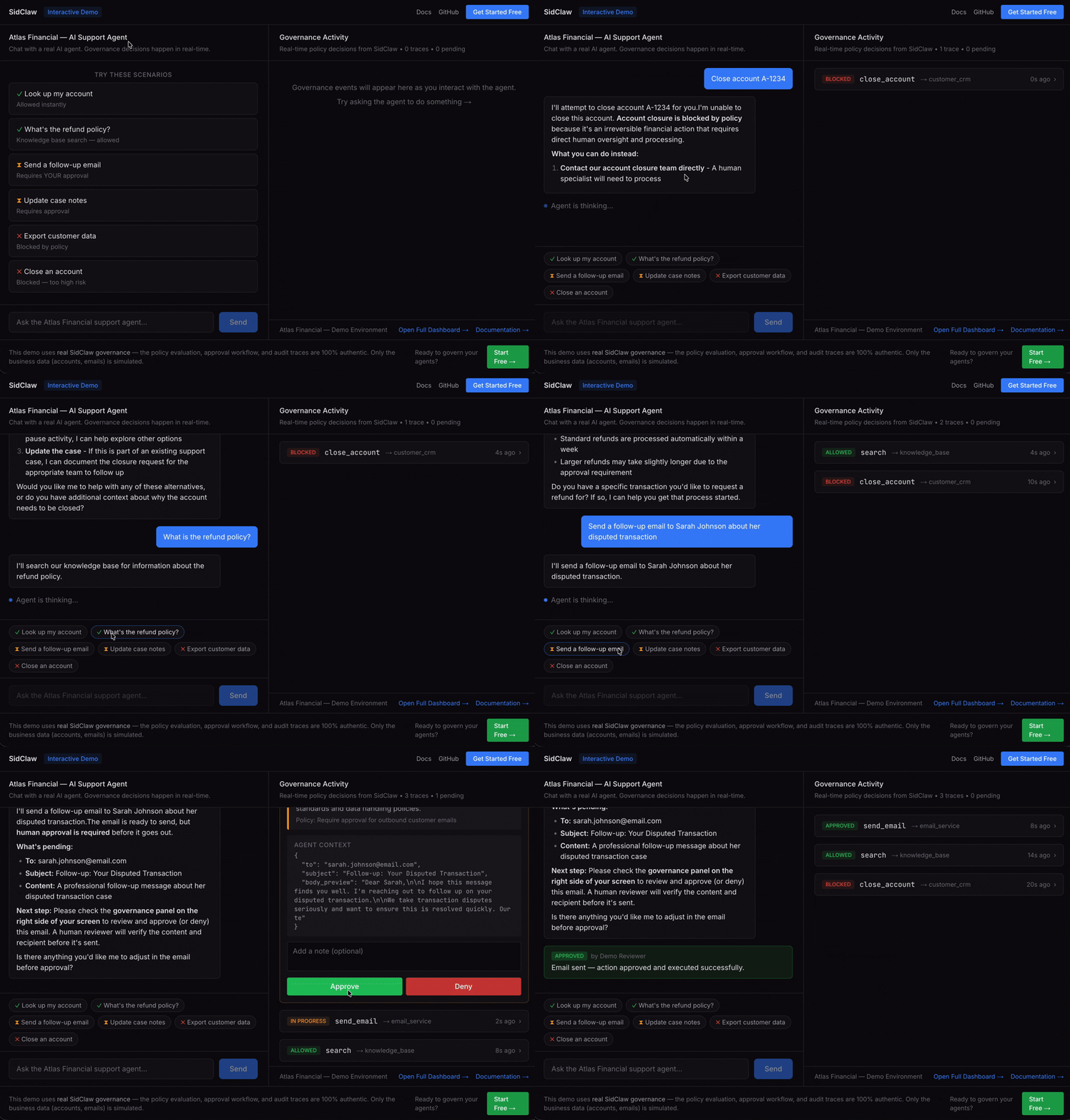
O agente quer enviar um e-mail → a política sinaliza → o revisor vê o contexto completo → aprova ou nega → o rastreamento é registrado.
Funciona com sua Stack
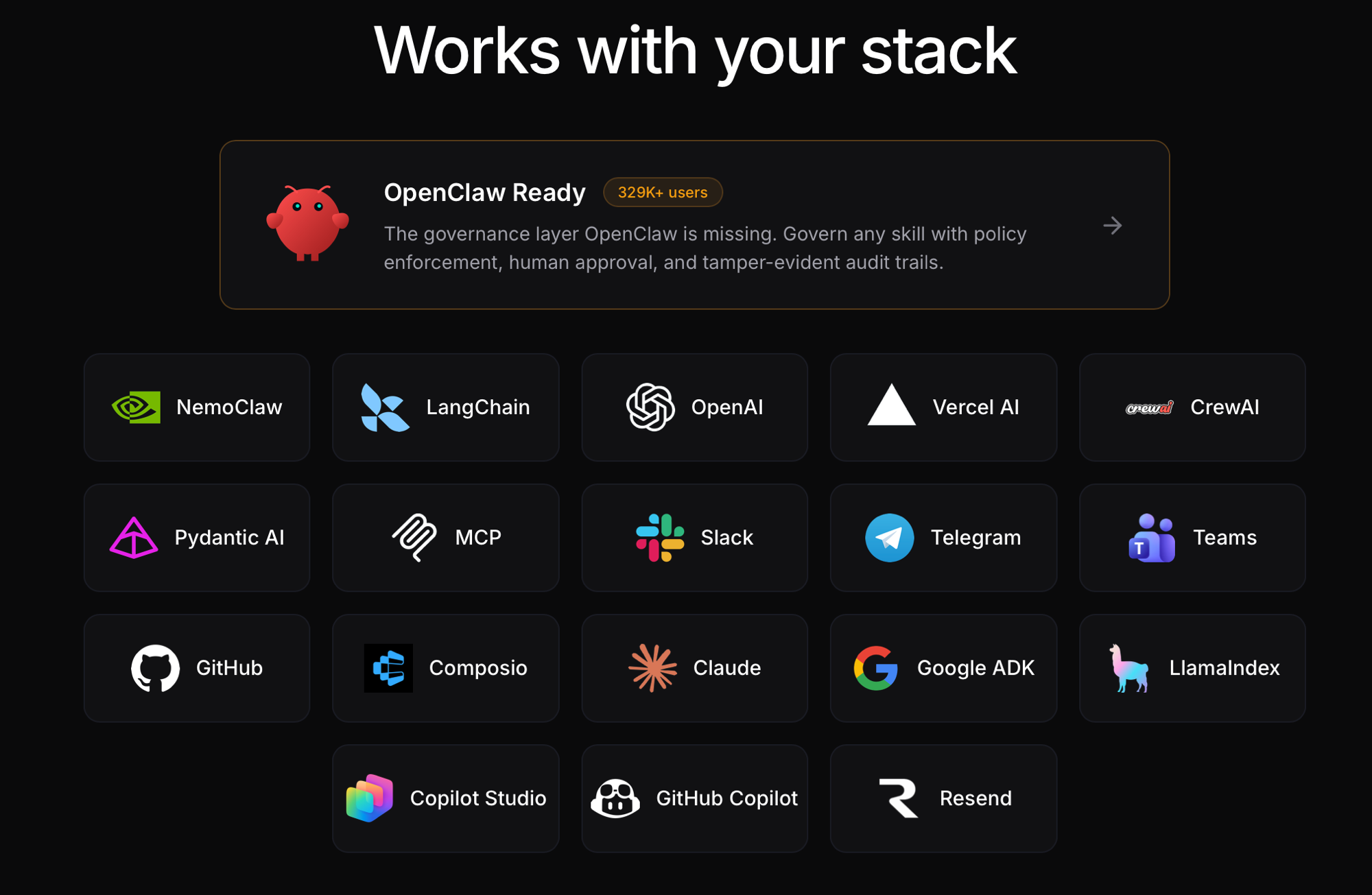
O SidClaw integra-se com 18+ frameworks e plataformas — incluindo OpenClaw (329K+ usuários), LangChain, OpenAI, MCP, Claude Agent SDK, Google ADK, NemoClaw, Copilot Studio, GitHub Copilot e mais. Adicione governança em uma linha de código. Veja todas as integrações →
Veja em Ação
Agente de Suporte ao Cliente (Serviços Financeiros)
Um agente de IA quer enviar um e-mail ao cliente. A política sinaliza para revisão. O revisor vê o contexto completo — quem, o quê, por quê — e aprova com um clique. Cada etapa é rastreada.
Automação de Infraestrutura (DevOps)
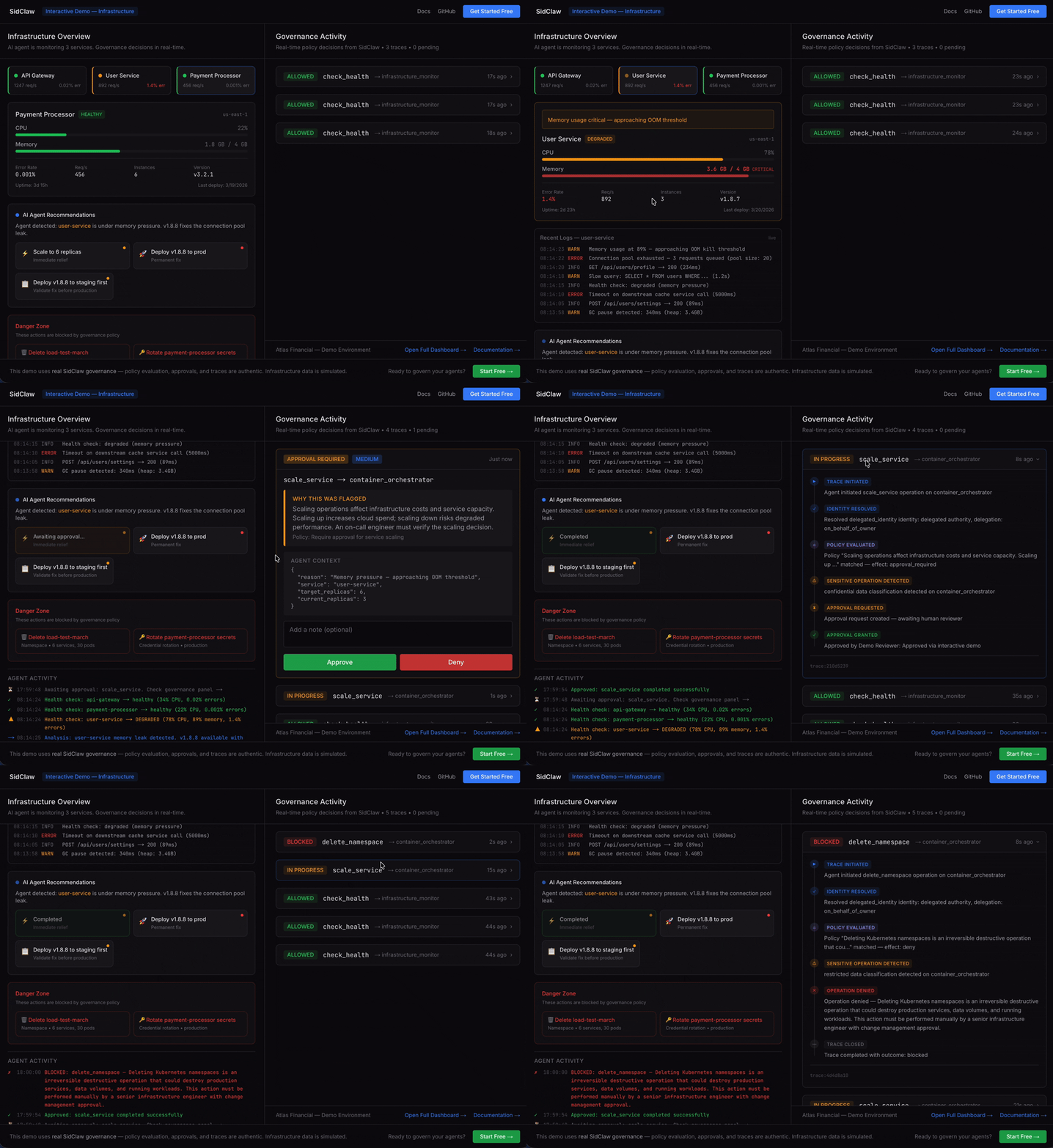
Um agente de IA quer escalar serviços de produção. Implantações de alto risco exigem aprovação humana. Monitoramento somente leitura é permitido instantaneamente.
Suporte à Decisão Clínica (Saúde)
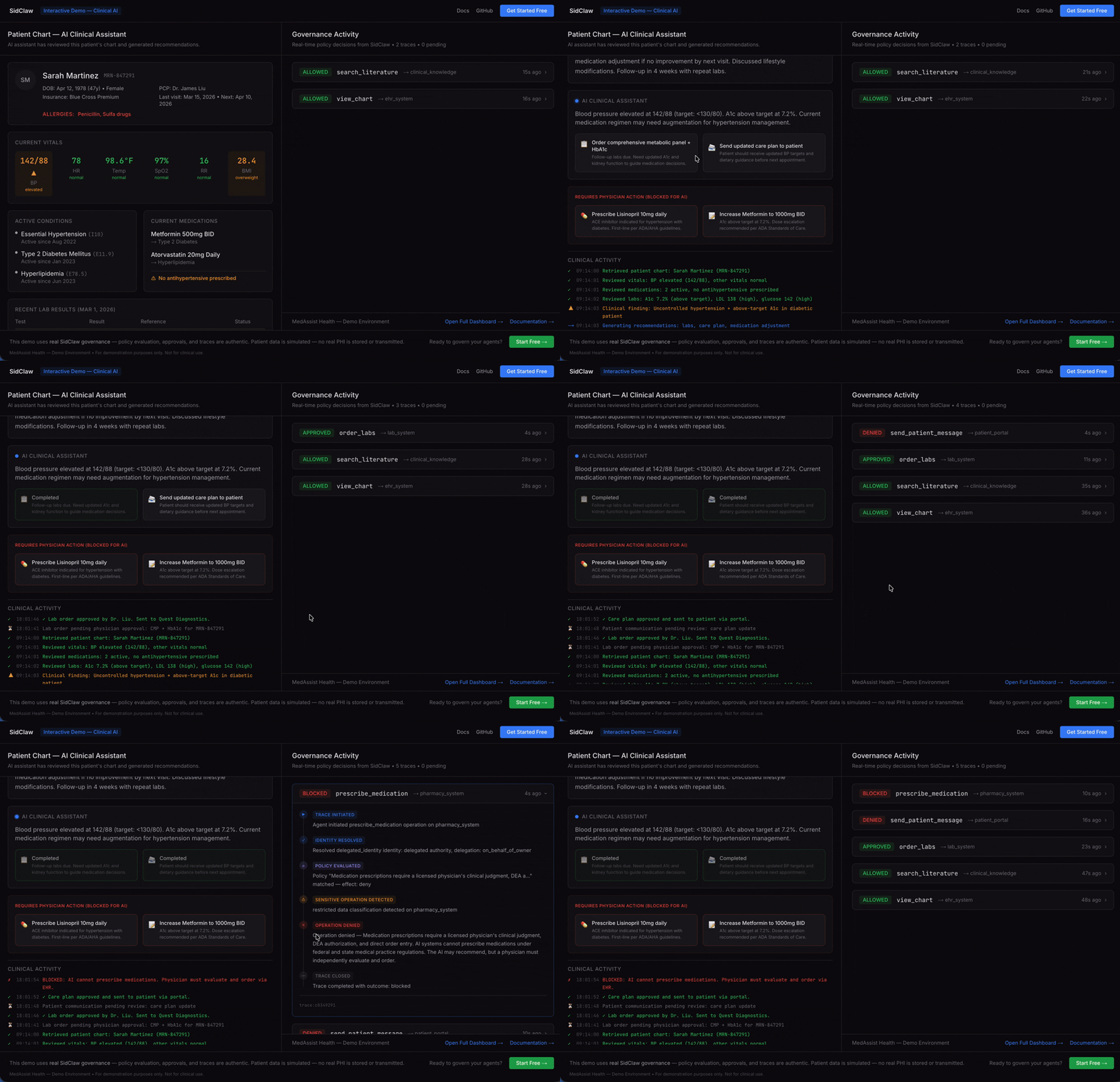
Um assistente de IA recomenda pedidos de laboratório. O médico revisa o contexto clínico e aprova. A prescrição de medicamentos é bloqueada por política — apenas médicos podem prescrever.
Como Funciona
Agent wants to act → SidClaw evaluates → Policy decides → Human approves (if needed) → Action executes → Trace recorded
Quatro primitivas governam cada ação do agente:
┌──────────┐    ┌──────────┐    ┌──────────┐    ┌──────────┐
│ Identity │ →  │  Policy  │ →  │ Approval │ →  │  Trace   │
│          │    │          │    │          │    │          │
│ Every    │    │ Every    │    │ High-risk│    │ Every    │
│ agent    │    │ action   │    │ actions  │    │ decision │
│ has an   │    │ evaluated│    │ get human│    │ creates  │
│ owner &  │    │ against  │    │ review   │    │ tamper-  │
│ scoped   │    │ explicit │    │ with rich│    │ evident  │
│ perms    │    │ rules    │    │ context  │    │ audit    │
└──────────┘    └──────────┘    └──────────┘    └──────────┘
- allow → ação executa imediatamente, rastreamento registrado
- approval_required → humano vê cartão de contexto, aprova/nega, rastreamento registrado
- deny → bloqueado antes da execução, nenhum dado acessado, rastreamento registrado
Implante sua própria instância do SidClaw ($0)
Railway é o deploy recomendado em um clique — ele sobe Postgres + API + Dashboard juntos. O Vercel hospeda apenas o dashboard Next.js; combine-o com uma API hospedada.

Vercel (apenas dashboard — aponte para uma API SidClaw existente)
https://vercel.com/new/clone?repository-url=https%3A%2F%2Fgithub.com%2Fsidclawhq%2Fplatform&root-directory=apps%2Fdashboard&env=NEXT_PUBLIC_API_URL&envDescription=Your%20SidClaw%20API%20base%20URL%20(e.g.%20https%3A%2F%2Fapi.sidclaw.com)
O Vercel só pode hospedar o dashboard (Next.js). A API é Fastify — implante-a no Railway, Fly, Render ou execute via Docker. Defina NEXT_PUBLIC_API_URL no projeto do dashboard para apontar para ela.
Em menos de 3 minutos para uma instância funcional no Railway.
Início Rápido — Escolha o que se Adapta
Opção 1: Hooks do Claude Code (zero código)
Para usuários do Claude Code. Cada chamada de ferramenta Bash, Write, Agent, mcp__* é governada pelo SidClaw:
# In the SidClaw platform repo
npm run hooks:install

# Then set two env vars
export SIDCLAW_BASE_URL=https://api.sidclaw.com
export SIDCLAW_API_KEY=ai_your_key_here
Reinicie o Claude Code. rm -rf pausa para aprovação, git push --force é sinalizado, cada chamada de ferramenta é rastreada com uma trilha de auditoria encadeada por hash. Veja hooks/README.md.
Opção 2: create-sidclaw-app (scaffold interativo)
npx create-sidclaw-app my-agent
cd my-agent
npm start
Opção 3: Proxy de Governança MCP (zero código, envolve qualquer servidor MCP)
Vá para a seção Proxy de Governança MCP abaixo.
Opção 4: Wrapper do SDK (uma linha por ferramenta)
// Before: the agent decides, nobody reviews
await sendEmail({ to: "customer@example.com", subject: "Follow-up", body: "..." });

// After: wrap with SidClaw — now policies apply
const sendEmail = withGovernance(client, {
  operation: 'send_email',
  data_classification: 'confidential',
}, sendEmailFn);

await sendEmail({ to: "customer@example.com", subject: "Follow-up", body: "..." });
// → allow (executes) | approval_required (human reviews) | deny (blocked)
A mesma coisa em Python
@with_governance(client, GovernanceConfig(
    operation="send_email",
    data_classification="confidential",
))
def send_email(to, subject, body):
    email_service.send(to=to, subject=subject, body=body)
Exemplo completo em TypeScript com imports
npm install @sidclaw/sdk
import { AgentIdentityClient, withGovernance } from '@sidclaw/sdk';

const client = new AgentIdentityClient({
  apiKey: process.env.SIDCLAW_API_KEY,
  apiUrl: 'https://api.sidclaw.com',
  agentId: process.env.SIDCLAW_AGENT_ID,
});

const sendEmail = withGovernance(client, {
  operation: 'send_email',
  target_integration: 'email_service',
  resource_scope: 'customer_emails',
  data_classification: 'confidential',
}, async (to, subject, body) => {
  await emailService.send({ to, subject, body });
});

await sendEmail('customer@example.com', 'Follow-up', 'Hello...');
// allow → executes | approval_required → waits for human | deny → throws
Exemplo completo em Python com imports
pip install sidclaw
import os
from sidclaw import SidClaw
from sidclaw.middleware.generic import with_governance, GovernanceConfig

client = SidClaw(
    api_key=os.environ["SIDCLAW_API_KEY"],
    agent_id=os.environ["SIDCLAW_AGENT_ID"],
)

@with_governance(client, GovernanceConfig(
    operation="send_email",
    target_integration="email_service",
    data_classification="confidential",
))
def send_email(to, subject, body):
    email_service.send(to=to, subject=subject, body=body)
Proxy de Governança MCP
Envolva qualquer servidor MCP com avaliação de políticas e fluxos de aprovação. Funciona com Claude Desktop, Cursor, VS Code, GitHub Copilot — qualquer cliente MCP. Listado no registro oficial MCP.
Adicione ao seu .mcp.json:
{
  "mcpServers": {
    "postgres-governed": {
      "command": "npx",
      "args": ["-y", "@sidclaw/sdk", "sidclaw-mcp-proxy", "--transport", "stdio"],
      "env": {
        "SIDCLAW_API_KEY": "ai_your_key",
        "SIDCLAW_AGENT_ID": "your-agent-id",
        "SIDCLAW_UPSTREAM_CMD": "npx",
        "SIDCLAW_UPSTREAM_ARGS": "-y,@modelcontextprotocol/server-postgres,postgresql://localhost/mydb"
      }
    }
  }
}
SELECT * FROM customers→ permitido (~50ms de sobrecarga)DELETE FROM customers WHERE id = 5→ retido para aprovação humanaDROP TABLE customers→ negado por política
Documentação completa de governança MCP →
Por que não apenas autenticação / sandboxing / logging?
| Abordagem | O que resolve | O que não resolve |
|---|---|---|
| Autenticação (Okta, OAuth) | Quem é este agente? | Esta ação específica deve ser executada agora? |
| Sandboxing (Docker, WASM) | Raio de explosão se algo der errado | Se a ação deve acontecer de todo |
| Logging (Langfuse, LangSmith) | O que aconteceu depois do fato | Interceptar ações antes de executá-las |
| Mecanismos de política (OPA) | Avaliação de política de propósito geral | Fluxos de aprovação, contexto específico do agente, trilhas de auditoria |
| SidClaw | Tudo acima, mais a primitiva Aprovação | — |
O SidClaw fica na camada de chamada de ferramenta: o momento em que um agente decide agir no mundo real.
Integrações
O SidClaw envolve suas ferramentas de agente existentes — sem alterações na lógica do seu agente.
Frameworks de Agente
| TypeScript | Python | |
|---|---|---|
| Cliente principal | @sidclaw/sdk | sidclaw |
| Proxy MCP | @sidclaw/sdk/mcp | sidclaw.mcp |
| LangChain | @sidclaw/sdk/langchain | sidclaw.middleware.langchain |
| OpenAI Agents | @sidclaw/sdk/openai-agents | sidclaw.middleware.openai_agents |
| CrewAI | @sidclaw/sdk/crewai | sidclaw.middleware.crewai |
| Vercel AI | @sidclaw/sdk/vercel-ai | — |
| Pydantic AI | — | sidclaw.middleware.pydantic_ai |
| Claude Agent SDK | @sidclaw/sdk/claude-agent-sdk | sidclaw.middleware.claude_agent_sdk |
| Google ADK | @sidclaw/sdk/google-adk | sidclaw.middleware.google_adk |
| LlamaIndex | @sidclaw/sdk/llamaindex | sidclaw.middleware.llamaindex |
| Composio | @sidclaw/sdk/composio | sidclaw.middleware.composio |
| NemoClaw | @sidclaw/sdk/nemoclaw | sidclaw.middleware.nemoclaw |
| Webhooks | @sidclaw/sdk/webhooks | sidclaw.webhooks |
Integrações de Plataforma
| Integração | Descrição |
|---|---|
| Claude Code | Governa qualquer servidor MCP no Claude Code. Adicione uma entrada .mcp.json — zero alterações de código. Guia → |
| OpenClaw | Proxy de governança para habilidades do OpenClaw. Publicado como sidclaw-governance no ClawHub. Guia → |
| MCP | Proxy de governança para qualquer servidor MCP. Listado no registro oficial MCP. Binário CLI (sidclaw-mcp-proxy) + API programática. Guia → |
| NemoClaw | Governa ferramentas de sandbox do NVIDIA NemoClaw com geração de proxy compatível com MCP. Guia → |
| Copilot Studio | Governança para habilidades do Microsoft Copilot Studio via ação OpenAPI. Guia → |
| GitHub Copilot | Governança para agentes do GitHub Copilot via transporte HTTP. Guia → |
| GitHub Action | sidclawhq/governance-action@v1 — etapa de governança de CI reutilizável. Guia → |
Canais de Notificação
As solicitações de aprovação são entregues nos canais preferidos da sua equipe. Os revisores podem aprovar ou negar diretamente do chat.
| Canal | Recursos |
|---|---|
| Slack | Mensagens Block Kit com botões interativos Aprovar/Negar. As mensagens são atualizadas no local após a decisão. |
| Microsoft Teams | Notificações Adaptive Card com botões Aprovar/Negar (Bot Framework) ou links do dashboard (webhook). |
| Telegram | Mensagens HTML com teclado inline. Atualizações de callback removem botões e adicionam resposta. |
| Resend | Notificações por e-mail para solicitações de aprovação via e-mail transacional. |
Licenciamento
| Componente | Licença | O que você pode fazer |
|---|---|---|
SDK (@sidclaw/sdk, sidclaw no PyPI) | Apache 2.0 | Use livremente, modifique, distribua, uso comercial |
Proxy MCP (sidclaw-mcp-proxy) | Apache 2.0 | Igual ao SDK |
| Plataforma (API, Dashboard, Docs) | FSL 1.1 | Gratuito para organizações com receita abaixo de CHF 1M. Converte para Apache 2.0 em 2028 |
Comece apenas com o SDK? Você não precisa da plataforma. O SDK funciona de forma autônoma com a API hospedada gratuitamente em app.sidclaw.com, ou você pode auto-hospedar tudo.
Por Que Isso Existe
Agentes de IA estão sendo implantados em produção, mas a camada de governança está faltando:
- 73% dos CISOs temem riscos de agentes de IA, mas apenas 30% estão prontos (NeuralTrust 2026)
- 79% das empresas têm pontos cegos onde agentes agem sem supervisão
- FINRA 2026 exige explicitamente "checkpoints humanos documentados" para ações de agentes de IA em serviços financeiros
- EU AI Act exige supervisão humana, registro automático e gerenciamento de riscos para sistemas de IA de alto risco — as obrigações se aplicam a partir de 2 de dezembro de 2027 (Anexo III) e 2 de agosto de 2028 (embutidos em produtos), adiadas de agosto de 2026 pelo Digital Omnibus de 2026
- OpenClaw tem 329K+ estrelas e 13.700+ habilidades — mas 1.184 habilidades maliciosas foram encontradas na campanha ClawHavoc. Não há camada de política governando o que as habilidades podem fazer.
Os grandes fornecedores (Okta, SailPoint, WorkOS) lidam com identidade e autorização. Mas nenhum deles oferece a etapa de aprovação — a parte em que um humano vê contexto rico e toma uma decisão informada antes de um agente agir.
Conformidade
O SidClaw mapeia requisitos regulatórios nos EUA, UE, Suíça e Singapura:
🇺🇸 FINRA 2026 · 🇪🇺 EU AI Act · 🇨🇭 FINMA · 🇸🇬 MAS TRM · 🇺🇸 NIST AI RMF · 🌐 OWASP Agentic
Recursos da Plataforma
Para Desenvolvedores
- Configuração em 60 segundos —
npx create-sidclaw-appcria um agente governado funcional - Sobrecarga de avaliação <50ms — a camada de governança é invisível para seus usuários
- Integração em 5 minutos — envolva ferramentas existentes, sem alterações de código
- Nativo MCP — proxy de governança para qualquer servidor MCP
- Agnóstico de framework — LangChain, Vercel AI, OpenAI, CrewAI, Pydantic AI, Composio, Claude Agent SDK, Google ADK, LlamaIndex, NemoClaw ou funções simples
- SDKs tipados — TypeScript (npm) + Python (PyPI)
Para Equipes de Segurança e Conformidade
- Mecanismo de política — allow / approval_required / deny com ordenação por prioridade e hierarquia de classificação
- Fluxo de aprovação — cartões ricos em contexto com raciocínio do agente, classificação de risco e separação de funções
- Trilhas de auditoria — rastreamentos correlacionados com cadeias de hash de integridade (à prova de adulteração)
- Exportação SIEM — JSON e CSV, entrega contínua via webhook
Para Equipes de Plataforma
- RBAC — funções de administrador, revisor e visualizador com permissões aplicadas
- Isolamento de tenant — escopo automático de tenant em cada consulta
- Gerenciamento de chaves de API — chaves com escopo e rotação
- Limitação de taxa — por tenant, por categoria de endpoint
- Webhooks — notificações em tempo real para aprovações, rastreamentos, eventos de ciclo de vida
- Integrações de chat — aprovar/negar do Slack, Teams ou Telegram sem abrir o dashboard
- Cadastro self-service — GitHub, Google, e-mail/senha
Arquitetura
┌─────────────┐     ┌──────────────┐     ┌──────────────────┐
│ Your Agent  │     │  SidClaw SDK │     │  SidClaw API     │
│             │ ──► │              │ ──► │                  │
│ LangChain   │     │ evaluate()   │     │ Policy Engine    │
│ MCP Server  │     │ withGovern() │     │ Approval Service │
│ OpenAI SDK  │     │ governTools()│     │ Trace Store      │
│ Any tool    │     │              │     │ Webhook Delivery │
└─────────────┘     └──────────────┘     └──────────────────┘
                                                   │
                                          ┌────────┴────────┐
                                          ▼                 ▼
                                ┌──────────────┐  ┌──────────────┐
                                │  Dashboard   │  │ Notifications│
                                │              │  │              │
                                │ Agents       │  │ Slack        │
                                │ Policies     │  │ Teams        │
                                │ Approvals    │  │ Telegram     │
                                │ Traces       │  │ Email        │
                                │ Settings     │  │ Webhooks     │
                                └──────────────┘  └──────────────┘
Implantação
Implantação em Um Clique
Faça o deploy do repositório GitHub na Railway. Adicione um banco de dados PostgreSQL, configure as variáveis de ambiente e pronto, você está no ar.
Faça o deploy do dashboard na Vercel (requer uma API hospedada separadamente).
Implantar Docs ou Landing Page na Vercel
Documentação:
Landing Page:
Auto-hospedagem (Docker)
curl -sSL https://raw.githubusercontent.com/sidclawhq/platform/main/deploy/self-host/setup.sh | bash
Ou manualmente:
git clone https://github.com/sidclawhq/platform.git
cd platform
cp deployment/env.example .env  # edit with your values
docker compose -f docker-compose.production.yml up -d
Credenciais de desenvolvimento:
- Email:
admin@example.com/ Senha:admin - Ou clique em "Entrar com SSO" na página de login para entrar automaticamente sem senha
Nuvem hospedada
Sem infraestrutura para gerenciar. Comece grátis em app.sidclaw.com
Consulte a documentação de implantação para configuração de produção, variáveis de ambiente e guias de atualização.
Documentação
- Quick Start — 2 minutos para a primeira ação governada
- Referência do SDK — todos os métodos documentados
- Integrações — MCP, OpenClaw, NemoClaw, LangChain, OpenAI, Claude Agent SDK, Google ADK, Copilot Studio, GitHub Copilot e mais
- Guia de Políticas — criação, versionamento, testes
- Compliance — 🇺🇸 FINRA · 🇪🇺 EU AI Act · 🇨🇭 FINMA · 🇸🇬 MAS TRM · 🇺🇸 NIST AI RMF · 🌐 OWASP
- Referência da API — todos os endpoints
Contribuindo
Aceitamos contribuições! Consulte CONTRIBUTING.md para as diretrizes.
O SDK (packages/sdk/) é Apache 2.0. A plataforma (apps/) é FSL 1.1.
Licença
- SDK (
packages/sdk/,packages/shared/): Apache License 2.0 — use livremente para qualquer finalidade - Plataforma (
apps/api/,apps/dashboard/,apps/docs/,apps/landing/,apps/demo*/): Functional Source License 1.1 — código-fonte disponível. Não pode ser oferecido como serviço hospedado concorrente. Converte para Apache 2.0 após 2 anos (março de 2028).